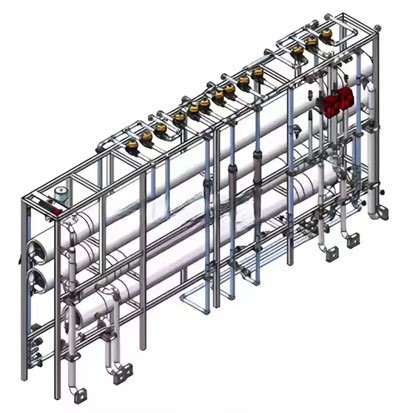

Can anaerobic digester tanks be used for sewage sludge treatment? That's a question I get asked a lot as a supplier of anaerobic digester tanks. And the short answer is yes, they absolutely can. In fact, anaerobic digestion is one of the most effective and sustainable ways to treat sewage sludge.


Let's start by understanding what sewage sludge is. Sewage sludge is the residual, semi - solid material left over from the treatment of wastewater. It contains a variety of organic and inorganic substances, including pathogens, heavy metals, and nutrients. If not properly treated, sewage sludge can pose significant environmental and health risks.
Anaerobic digester tanks work by creating an oxygen - free environment where anaerobic bacteria break down the organic matter in the sewage sludge. This process has several benefits. First of all, it reduces the volume of the sludge. As the bacteria consume the organic material, the sludge becomes more compact, which makes it easier to handle and dispose of.
Secondly, anaerobic digestion produces biogas. Biogas is a mixture of methane and carbon dioxide, and it can be used as a renewable energy source. You can use it to generate electricity, heat buildings, or even power vehicles. This not only helps to reduce the reliance on fossil fuels but also provides an additional revenue stream for sewage treatment plants.
Now, let's talk about the different types of anaerobic digester tanks that are suitable for sewage sludge treatment. One option is the UAS Uniform Distributor. This innovative device helps to ensure that the sewage sludge is evenly distributed throughout the digester tank. It improves the efficiency of the anaerobic digestion process by allowing the bacteria to access the organic matter more easily. You can learn more about it here: UAS Uniform Distributor.
Another important component is the Three Phase Separator Uasb. This separator is crucial for separating the biogas, liquid, and solid phases during the anaerobic digestion process. It helps to ensure that the biogas can be collected efficiently and that the liquid and solid products can be further processed. Check out more details about it here.
The IC Anaerobic Reactor is also a popular choice for sewage sludge treatment. It features a high - rate anaerobic digestion process, which means it can handle large volumes of sewage sludge in a relatively small space. The IC Anaerobic Reactor is known for its high efficiency and stability. Find out more about it here.
When it comes to the process of using anaerobic digester tanks for sewage sludge treatment, it typically involves several steps. First, the sewage sludge is fed into the digester tank. The temperature and pH levels inside the tank are carefully controlled to create an optimal environment for the anaerobic bacteria. As the bacteria break down the organic matter, biogas is produced and collected.
After the anaerobic digestion process is complete, the remaining sludge is further treated to remove any remaining pathogens and heavy metals. This treated sludge can then be used as a fertilizer in agriculture, which is a great way to recycle nutrients and reduce waste.
There are also some challenges associated with using anaerobic digester tanks for sewage sludge treatment. One of the main challenges is the initial cost of setting up the system. Anaerobic digester tanks and related equipment can be quite expensive. However, the long - term benefits, such as the reduction in sludge disposal costs and the generation of renewable energy, often outweigh the initial investment.
Another challenge is the need for proper maintenance. The anaerobic digester tanks need to be regularly monitored to ensure that the temperature, pH, and other parameters are within the optimal range. Any changes in these parameters can affect the performance of the anaerobic digestion process.
In addition, the quality of the sewage sludge can vary, and this can also impact the efficiency of the anaerobic digestion process. Some sewage sludge may contain high levels of contaminants, which can inhibit the growth of the anaerobic bacteria. Therefore, it's important to pre - treat the sewage sludge to remove any potential inhibitors.
Despite these challenges, the use of anaerobic digester tanks for sewage sludge treatment is becoming more and more popular. Many sewage treatment plants around the world are adopting this technology to improve their environmental performance and reduce their operating costs.
If you're considering using anaerobic digester tanks for sewage sludge treatment in your sewage treatment plant, I'd be more than happy to help. As a supplier of anaerobic digester tanks, I have a wealth of experience and knowledge in this field. I can provide you with the right equipment and technical support to ensure that your anaerobic digestion system runs smoothly.
Whether you're looking for a UAS Uniform Distributor, a Three Phase Separator Uasb, or an IC Anaerobic Reactor, I can offer you high - quality products at competitive prices. Don't hesitate to reach out if you have any questions or if you're interested in a purchase. Let's work together to make your sewage sludge treatment more efficient and sustainable.
References
- Environmental Protection Agency. (2023). Anaerobic Digestion: A Sustainable Solution for Organic Waste Management.
- Smith, J. (2022). Anaerobic Digestion Technology for Sewage Sludge Treatment. Journal of Environmental Science and Technology.