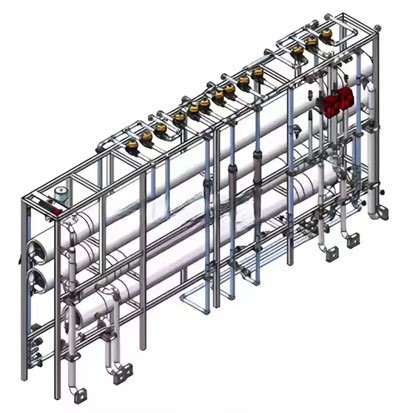

Yo, what's up everyone! I'm stoked to share some insights on a topic that's super important in the world of waste management and renewable energy: how long the anaerobic digestion process in tanks takes. As a supplier of anaerobic digester tanks, I've seen firsthand how this process can transform organic waste into valuable resources like biogas and nutrient-rich digestate.


Let's start by breaking down what anaerobic digestion is. Simply put, it's a natural process where microorganisms break down organic matter in the absence of oxygen. This happens in specialized tanks called anaerobic digesters, which come in various shapes and sizes depending on the specific application.
Now, onto the burning question: how long does the anaerobic digestion process actually take? Well, the answer isn't as straightforward as you might think. There are several factors that can influence the duration of the process, including the type of feedstock, the temperature inside the tank, and the design of the digester itself.
Feedstock Type
The type of organic material being fed into the anaerobic digester plays a huge role in determining how long the digestion process will take. Some feedstocks, like food waste and manure, are relatively easy to break down and can be digested in a matter of days or weeks. On the other hand, more complex materials, such as lignocellulosic biomass (e.g., wood chips, straw), can take much longer to decompose.
For example, if you're using food waste as your feedstock, you can expect the anaerobic digestion process to take anywhere from 15 to 30 days. This is because food waste is rich in easily digestible carbohydrates, proteins, and fats, which the microorganisms can quickly break down. In contrast, lignocellulosic biomass contains a high proportion of cellulose, hemicellulose, and lignin, which are more resistant to degradation. As a result, the digestion process for lignocellulosic biomass can take several months or even years.
Temperature
Temperature is another crucial factor that affects the rate of anaerobic digestion. The microorganisms responsible for breaking down the organic matter have an optimal temperature range at which they function most efficiently. In general, there are three main temperature ranges for anaerobic digestion: mesophilic (25 - 40°C), thermophilic (50 - 60°C), and psychrophilic (below 20°C).
Mesophilic digestion is the most common type of anaerobic digestion, as it requires less energy to maintain the temperature inside the tank. At mesophilic temperatures, the digestion process typically takes between 20 and 40 days. Thermophilic digestion, on the other hand, is faster but requires more energy to maintain the higher temperature. The digestion process at thermophilic temperatures can take as little as 10 to 15 days. Psychrophilic digestion occurs at lower temperatures and is slower, with the process taking several months.
Digester Design
The design of the anaerobic digester also plays a role in determining the duration of the digestion process. There are several different types of anaerobic digesters, each with its own advantages and disadvantages. Some of the most common types include the IC Anaerobic Reactor, the Three Phase Separator Uasb, and the UASB Anaerobic Reactor Introduction.
The IC Anaerobic Reactor is a high-rate anaerobic digester that uses an internal circulation system to enhance the mixing of the feedstock and the microorganisms. This design allows for a shorter digestion time compared to traditional digesters. The Three Phase Separator Uasb is another popular type of anaerobic digester that uses a three-phase separation system to separate the biogas, liquid, and solid phases of the digestate. This design helps to improve the efficiency of the digestion process and reduce the digestion time. The UASB Anaerobic Reactor is a simple and cost-effective anaerobic digester that uses a upflow anaerobic sludge blanket (UASB) to treat wastewater. This design is suitable for small-scale applications and can have a digestion time of several weeks.
Typical Timeframes
Based on the factors mentioned above, here are some typical timeframes for the anaerobic digestion process in different types of digesters:
- Mesophilic Digestion: 20 - 40 days
- Thermophilic Digestion: 10 - 15 days
- Psychrophilic Digestion: Several months
It's important to note that these are just general guidelines, and the actual digestion time can vary depending on the specific conditions of the digester and the feedstock being used.
Why Does It Matter?
Understanding how long the anaerobic digestion process takes is important for several reasons. First, it helps you to plan and manage your waste management and renewable energy projects more effectively. By knowing how long it will take to produce biogas and digestate, you can schedule the feeding and harvesting of the digester accordingly.
Second, the digestion time can also affect the quality and quantity of the biogas and digestate produced. A longer digestion time generally results in a higher quality biogas with a higher methane content, as well as a more stable and nutrient-rich digestate. On the other hand, a shorter digestion time may result in a lower quality biogas and a less stable digestate.
Conclusion
In conclusion, the duration of the anaerobic digestion process in tanks can vary depending on several factors, including the type of feedstock, the temperature inside the tank, and the design of the digester. By understanding these factors, you can optimize the digestion process to achieve the best results in terms of biogas production and waste management.
If you're interested in learning more about anaerobic digester tanks or have any questions about the anaerobic digestion process, feel free to reach out to us. We're here to help you find the right solution for your specific needs. Whether you're a small farm looking to convert manure into biogas or a large industrial facility looking to treat wastewater, we have the expertise and experience to provide you with high-quality anaerobic digester tanks and support.
Let's work together to make the world a cleaner and more sustainable place!
References
- Smith, J. (2020). Anaerobic Digestion: Principles and Applications. Elsevier.
- Jones, A. (2019). Waste to Energy: The Role of Anaerobic Digestion. CRC Press.
- Brown, C. (2018). Anaerobic Digestion for Biogas Production: A Practical Guide. Springer.