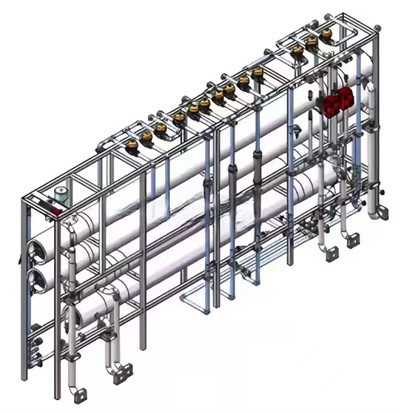

Hey there! As a supplier of FRP Spray Towers, I often get asked about the differences between single - stage and multi - stage FRP Spray Towers. So, I thought I'd write this blog to break it all down for you.
What are FRP Spray Towers?
First off, let's quickly touch on what FRP Spray Towers are. FRP stands for Fiber - Reinforced Plastic. These spray towers are used in a variety of industries to remove pollutants from exhaust gases. They work by spraying a liquid (usually water or a chemical solution) into the gas stream. The pollutants in the gas react with the liquid and are then removed from the gas. You can learn more about FRP Spray Tower on our website.
Single - Stage FRP Spray Towers
A single - stage FRP Spray Tower is, as the name suggests, a tower with just one stage of treatment. In this setup, the gas enters the tower and passes through a single spray section. The liquid is sprayed into the gas stream, and the pollutants are removed in one go.
One of the main advantages of single - stage towers is their simplicity. They're easier to design, build, and maintain. Since there's only one stage, there are fewer components to worry about. This also means they're generally more cost - effective in terms of initial investment. If you have a relatively low - volume or low - concentration pollutant stream, a single - stage tower might be a great option.


However, single - stage towers do have their limitations. They're not as effective at removing high - concentration pollutants or multiple types of pollutants. If your gas stream has a complex mix of pollutants or a high concentration of a particular pollutant, a single - stage tower may not be able to achieve the desired level of purification.
Multi - Stage FRP Spray Towers
Multi - stage FRP Spray Towers, on the other hand, have multiple stages of treatment. The gas passes through several spray sections, each designed to target different pollutants or different levels of purification.
The big advantage of multi - stage towers is their efficiency. They can handle high - concentration pollutant streams and complex mixtures of pollutants much better than single - stage towers. Each stage can be optimized to remove a specific type of pollutant, which means you can achieve a much higher level of purification.
For example, in a two - stage tower, the first stage might be designed to remove large particulate matter, while the second stage focuses on removing gaseous pollutants. This sequential approach allows for a more thorough cleaning of the gas stream.
But multi - stage towers come with their own set of challenges. They're more complex to design and build. There are more components, which means more potential points of failure. They also require more maintenance. And of course, the initial investment is higher compared to single - stage towers.
Cost Comparison
When it comes to cost, single - stage towers are generally cheaper. The lower initial investment and simpler maintenance make them an attractive option for small - scale operations or those on a tight budget. However, if you need a high - level of purification and have a large or complex pollutant stream, the long - term benefits of a multi - stage tower may outweigh the higher upfront cost.
Applications
Single - stage FRP Spray Towers are commonly used in industries where the pollutant load is relatively low. For example, in some small - scale manufacturing processes where the exhaust gases contain only a small amount of pollutants.
Multi - stage FRP Spray Towers are more suitable for industries with high - volume or high - concentration pollutant streams. Chemical plants, power plants, and large - scale manufacturing facilities often use multi - stage towers to meet strict environmental regulations.
Which One Should You Choose?
Deciding between a single - stage and a multi - stage FRP Spray Tower depends on several factors. You need to consider the nature of your pollutant stream (concentration, type of pollutants), your budget, and your long - term purification goals.
If you're not sure which type of tower is right for you, don't worry! Our team of experts is here to help. We can analyze your specific situation and recommend the best solution for your needs.
Other Types of Spray Towers
In addition to FRP Spray Towers, we also offer PP Spray Tower. PP stands for Polypropylene. These towers are made of a different material and have their own set of advantages and applications. They're often used in situations where corrosion resistance is a key requirement.
Conclusion
In conclusion, both single - stage and multi - stage FRP Spray Towers have their pros and cons. Single - stage towers are simple and cost - effective for low - load applications, while multi - stage towers offer higher efficiency for complex and high - load situations.
If you're in the market for a spray tower, whether it's a single - stage or multi - stage FRP Spray Tower, or even a PP Spray Tower, we're here to assist you. Our team has years of experience in the industry and can provide you with the best solution for your specific needs. Don't hesitate to reach out to us for a consultation and to start the process of purchasing the perfect spray tower for your business.
References
- Industrial Air Pollution Control Handbook, Second Edition. Edited by David Cooper and F. C. Alley.
- Air Pollution Control: A Design Approach, Fourth Edition. By John A. Dean and William C. Dean.