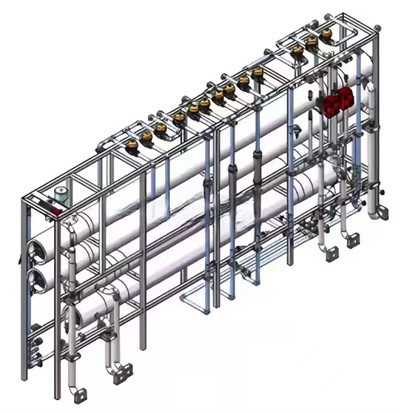

Hey there! As a supplier of anaerobic digester tanks, I'm super stoked to share with you the main components of these amazing pieces of equipment. Anaerobic digester tanks are like little powerhouses that break down organic matter in the absence of oxygen, producing biogas and nutrient-rich digestate. Let's dive into the key parts that make these tanks tick.
1. Inlet System
The inlet system is where all the action starts. It's responsible for bringing in the organic feedstock into the anaerobic digester tank. This feedstock can be anything from agricultural waste, like manure and crop residues, to food waste from restaurants and households. The inlet should be designed to ensure a smooth and consistent flow of the feedstock into the tank.
A well - designed inlet system also helps in preventing blockages. For instance, it might have a pre - treatment step, like a screen or a grinder, to break down large chunks of material. This ensures that the feedstock can be easily processed by the microorganisms inside the tank.
2. Mixing System
Once the feedstock is in the tank, it needs to be well - mixed. The mixing system plays a crucial role in this. It ensures that the microorganisms have access to the organic matter evenly. There are different types of mixing systems, such as mechanical mixers and gas - powered mixers.
Mechanical mixers use a motor and blades to stir the contents of the tank. They can be very effective in ensuring a homogenous mixture. Gas - powered mixers, on the other hand, use the biogas produced in the tank to create a circulation pattern. This is a more energy - efficient option in some cases.
3. Reactor
The reactor is the heart of the anaerobic digester tank. This is where the magic happens – the organic matter is broken down by anaerobic microorganisms. There are different types of reactors, each with its own advantages.
One popular type is the Upflow Anaerobic Sludge Blanket (UASB) reactor. You can learn more about it UASB Anaerobic Reactor Introduction. In a UASB reactor, the feedstock flows upwards through a blanket of anaerobic sludge. The microorganisms in the sludge break down the organic matter, producing biogas.
Another type is the Internal Circulation (IC) Anaerobic Reactor. Check out IC Anaerobic Reactor for more details. The IC reactor has a unique design that allows for a high - rate of organic matter degradation. It has an internal circulation system that helps in better mixing and faster reaction rates.
4. Three - Phase Separator
A three - phase separator is an essential component of an anaerobic digester tank. It separates the biogas, the liquid, and the solid digestate. This is important because it allows for the efficient collection of biogas and the proper disposal or further use of the digestate.
The Three Phase Separator Uasb is a common type of three - phase separator used in UASB reactors. It works by allowing the biogas to rise to the top, the liquid to flow out through a side outlet, and the solid digestate to settle at the bottom.
5. Biogas Collection System
The biogas produced in the anaerobic digester tank is a valuable resource. It can be used for heating, electricity generation, or as a vehicle fuel. The biogas collection system is responsible for capturing the biogas and transporting it to where it's needed.
This system usually consists of pipes and valves. The pipes collect the biogas from the top of the tank and transport it to a storage or utilization facility. The valves are used to control the flow of biogas and ensure that it's collected safely.
6. Temperature Control System
Anaerobic microorganisms are very sensitive to temperature. They work best within a certain temperature range, usually between 30 - 40°C (86 - 104°F) for mesophilic digestion and 50 - 60°C (122 - 140°F) for thermophilic digestion.
The temperature control system helps in maintaining the optimal temperature inside the tank. This can be done through heating or cooling mechanisms. For example, in colder climates, a heating system might be used to keep the tank warm. In warmer climates, a cooling system might be required to prevent the temperature from getting too high.
7. Monitoring and Control System
To ensure the efficient operation of the anaerobic digester tank, a monitoring and control system is essential. This system allows operators to keep an eye on various parameters, such as temperature, pH, gas production, and feedstock flow rate.
Based on the data collected, operators can make adjustments to the system. For example, if the pH is too low, they can add a buffer to raise it. If the gas production is low, they can check the feedstock quality or the mixing system.
8. Outlet System
The outlet system is responsible for removing the digestate from the tank. The digestate is a nutrient - rich by - product that can be used as a fertilizer. The outlet should be designed to ensure a smooth flow of the digestate out of the tank.
It's important to note that the digestate might need some post - treatment before it can be used as a fertilizer. This can include processes like composting or drying.
Why Choose Our Anaerobic Digester Tanks?
At our company, we take pride in providing high - quality anaerobic digester tanks. Our tanks are designed with all the essential components mentioned above, and we ensure that they are built to last. We use the latest technology and materials to make sure that our tanks are efficient, reliable, and easy to operate.
Whether you're a small - scale farmer looking to manage your agricultural waste or a large - scale industrial facility wanting to reduce your environmental impact and produce renewable energy, our anaerobic digester tanks are the perfect solution.


If you're interested in learning more about our anaerobic digester tanks or want to discuss a potential purchase, don't hesitate to reach out. We're here to answer all your questions and help you find the best solution for your needs.
References
- Anaerobic Digestion: Principles and Applications, [Author's Name], [Publication Year]
- Biogas Technology Handbook, [Author's Name], [Publication Year]