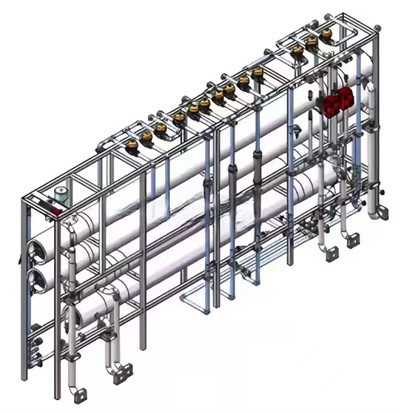

The air flotation machine is a crucial piece of equipment in various industries, especially in wastewater treatment and solid-liquid separation processes. As a leading air flotation machine supplier, we have witnessed firsthand the significance of different factors that can influence the performance of these machines. One such factor that often goes unnoticed but has a profound impact is the flow rate of water. In this blog, we will explore in detail what influence the flow rate of water has on the performance of an air flotation machine.
Understanding the Basics of Air Flotation Machines
Before delving into the impact of water flow rate, it is essential to understand how air flotation machines work. Air flotation is a process that uses air bubbles to separate suspended solids, oils, and other contaminants from water. The basic principle involves introducing air into the water, which forms tiny bubbles. These bubbles attach to the contaminants, causing them to rise to the surface where they can be skimmed off.


There are different types of air flotation machines available in the market, each with its own unique features and applications. For instance, the Micro-flotation Air Flotation Machine is designed to generate extremely fine bubbles, which are ideal for separating very small particles. The Dissolved Air Flotation Machine works by dissolving air in water under pressure and then releasing it to form bubbles. And the Shallow Air Flotation Machine is known for its high - efficiency separation in a relatively shallow tank.
Impact of Water Flow Rate on Air Flotation Machine Performance
1. Bubble - Particle Attachment
The flow rate of water has a direct impact on the attachment of bubbles to particles. When the water flow rate is too high, the contact time between bubbles and particles is reduced. This means that the bubbles do not have enough time to attach to the contaminants effectively. As a result, some of the particles may not be carried to the surface, leading to a lower separation efficiency.
On the other hand, if the water flow rate is too low, the bubbles may coalesce and form larger bubbles. Larger bubbles have a lower surface - area - to - volume ratio, which reduces their ability to attach to small particles. Therefore, there is an optimal water flow rate range for each type of air flotation machine, which ensures the best bubble - particle attachment.
2. Residence Time
Residence time is the amount of time that the water spends inside the air flotation machine. A higher water flow rate means a shorter residence time. If the residence time is too short, the separation process may not be completed. For example, in a dissolved air flotation machine, the air needs time to dissolve in the water under pressure and then form bubbles when the pressure is released. If the water is flowing too fast, this process may not occur fully, leading to a decrease in the number of bubbles available for separation.
Conversely, a very low water flow rate can lead to sedimentation of particles at the bottom of the tank. This is because the slow - moving water may not be able to keep the particles in suspension, and they will settle instead of being carried to the surface by the bubbles.
3. Skimming Efficiency
Skimming is the process of removing the floating contaminants from the surface of the water in the air flotation machine. The water flow rate can affect the skimming efficiency. A high flow rate can cause the surface layer to be more turbulent, making it difficult for the skimmer to collect the floating contaminants effectively. The turbulent flow may also cause some of the floating contaminants to be pushed back into the water instead of being removed.
In contrast, a low flow rate can result in a more stable surface layer, which is beneficial for skimming. However, if the flow rate is too low, the contaminants may accumulate and form a thick layer, which can also make skimming difficult.
4. Energy Consumption
The water flow rate also has an impact on the energy consumption of the air flotation machine. A higher flow rate usually requires more energy to pump the water through the system. Additionally, if the flow rate is too high and the separation efficiency is low, the machine may need to operate for a longer time to achieve the desired level of water treatment, which further increases energy consumption.
On the other hand, a very low flow rate may not fully utilize the capacity of the air flotation machine, resulting in an inefficient use of energy. Therefore, finding the optimal flow rate can help to reduce energy consumption and operating costs.
Determining the Optimal Water Flow Rate
Determining the optimal water flow rate for an air flotation machine depends on several factors, including the type of machine, the characteristics of the wastewater, and the desired level of treatment. For example, if the wastewater contains a high concentration of large particles, a relatively higher flow rate may be acceptable as long as the contact time between bubbles and particles is sufficient.
In general, it is recommended to conduct pilot tests to determine the optimal water flow rate for a specific application. During the pilot tests, different flow rates can be tried, and the separation efficiency, skimming efficiency, and energy consumption can be measured. Based on the results of the pilot tests, the most suitable flow rate can be selected.
Conclusion
In conclusion, the flow rate of water has a significant influence on the performance of an air flotation machine. It affects bubble - particle attachment, residence time, skimming efficiency, and energy consumption. As an air flotation machine supplier, we understand the importance of finding the optimal water flow rate for each customer's specific needs.
If you are in the market for an air flotation machine or need advice on optimizing the performance of your existing machine, we are here to help. Our team of experts can provide you with in - depth analysis and solutions tailored to your requirements. Contact us to start a purchase negotiation and take the first step towards efficient and effective water treatment.
References
- Wang, X., & Li, Y. (2018). Influence of flow rate on the performance of air flotation in wastewater treatment. Journal of Environmental Science and Technology, 21(3), 234 - 242.
- Zhang, L., & Chen, H. (2019). Study on the relationship between water flow rate and air flotation efficiency. Water Treatment Research, 35(2), 123 - 131.