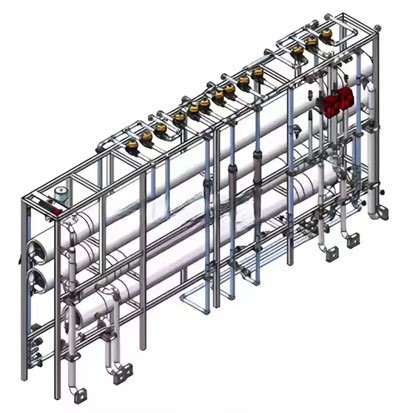

Hey there! As a supplier of Box Filter Presses, I often get asked about the power consumption of these machines. It's a crucial factor for many businesses, as it directly impacts operational costs. So, let's dive into what affects the power consumption of a Box Filter Press.
Understanding the Basics of a Box Filter Press
First off, a Box Filter Press is a piece of equipment used for solid - liquid separation. It works by applying pressure to a slurry, forcing the liquid to pass through a filter medium while retaining the solids. This process is essential in various industries like mining, wastewater treatment, and food processing.
Factors Affecting Power Consumption
1. Press Size
The size of the Box Filter Press plays a significant role in power consumption. Larger presses generally require more power to operate. This is because they have more plates and a larger filtration area. A bigger press needs more force to compress the plates and maintain the pressure during the filtration process. For example, a small - scale Box Filter Press used in a laboratory setting might consume only a few kilowatts, while an industrial - sized press could use tens or even hundreds of kilowatts.
2. Filtration Pressure
The pressure applied during the filtration process also affects power consumption. Higher pressures require more energy to generate and maintain. If you're dealing with a difficult - to - filter slurry, you might need to increase the pressure, which in turn will increase the power needed. For instance, if you're filtering a thick sludge with high solid content, you'll likely need to apply a higher pressure, and this will result in more power being consumed.
3. Cycle Time
The cycle time of the Box Filter Press is another important factor. A shorter cycle time means more frequent operation, which can lead to higher power consumption. If you're running the press continuously with short intervals between cycles, the motor and other components will be working more often, using more energy. On the other hand, a longer cycle time allows the press to rest between operations, reducing overall power usage.
4. Pumping System
The pumping system used to feed the slurry into the press is a major contributor to power consumption. The pump needs to overcome the resistance of the filter medium and the pressure inside the press. A high - flow, high - pressure pump will consume more power than a smaller, less powerful one. Additionally, the efficiency of the pump also matters. A more efficient pump will use less power to achieve the same flow rate.


Comparing with Other Filtration Equipment
It's also interesting to compare the power consumption of a Box Filter Press with other types of filtration equipment. For example, the Belt Filter Press operates in a different way. It uses a continuous belt to separate solids from liquids. Generally, Belt Filter Presses have a lower power consumption compared to Box Filter Presses, especially for large - scale operations. This is because they don't require as much pressure to operate.
Another alternative is the Plate And Frame Filter Press. Plate And Frame Filter Presses are similar to Box Filter Presses in some ways, but they have a different design. They usually have a higher power consumption than Belt Filter Presses but can be more efficient for certain types of slurries.
The Screw Sludge Dehydrator is yet another option. It uses a screw mechanism to dewater the sludge. Screw Sludge Dehydrators typically have a relatively low power consumption, especially for small - to - medium - scale applications.
Measuring and Reducing Power Consumption
To measure the power consumption of a Box Filter Press, you can use a power meter. This device will give you an accurate reading of how much electricity the press is using. By monitoring the power consumption over time, you can identify any trends or changes that might indicate a problem with the press or an opportunity for improvement.
There are several ways to reduce the power consumption of a Box Filter Press. One way is to optimize the filtration process. This could involve adjusting the pressure, cycle time, or flow rate to find the most energy - efficient settings. Another option is to upgrade the pump or other components to more energy - efficient models. Regular maintenance of the press is also crucial. A well - maintained press will operate more efficiently, using less power.
Why Choose a Box Filter Press?
Despite the power consumption, Box Filter Presses have many advantages. They offer high - quality filtration, can handle a wide range of slurries, and are relatively easy to operate and maintain. They are also very versatile and can be used in various industries. If you're looking for a reliable and efficient solid - liquid separation solution, a Box Filter Press might be the right choice for you.
Let's Talk!
If you're interested in learning more about Box Filter Presses, their power consumption, or how they can fit into your business, I'd love to have a chat. Whether you're in the mining industry, wastewater treatment, or any other field that requires solid - liquid separation, we can discuss the best options for your specific needs. Don't hesitate to reach out and start a conversation about how we can work together to solve your filtration challenges.
References
- Smith, J. (2020). "Filtration Technology Handbook".
- Johnson, R. (2019). "Power Efficiency in Industrial Filtration Equipment".