Zero-discharge wastewater treatment solution
Jinan Guangbo Environmental Protection Technology Co., Ltd. adheres to the core concept of "full wastewater recovery, minimal solid waste, and high resource utilization", focusing on the research and development of zero liquid discharge (ZLD) technology and its engineering applications. It provides a full-chain service from technical consultation, scheme design to equipment manufacturing, system integration, and operation management. It has established a mature technology and engineering system domestically and has deeply penetrated the Vietnamese market. Through local customization and resource integration, it helps customers in both regions achieve a dual value enhancement of environmental compliance and resource recycling.
1. Engineering Case
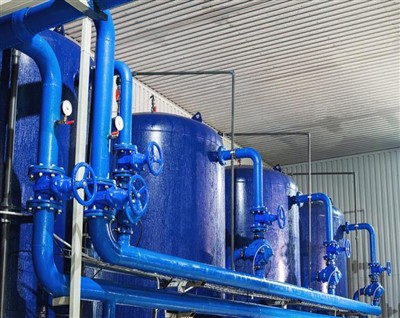
The secondary concentration treatment project for the concentrated water of the reclaimed water system of Kanglongda (Vietnam) Security Technology Co., Ltd. (Phase II)

Processing scale:
RO concentrated water 120 m³/h →concentrated water 18 m³/h (after secondary concentration)
Construction location:
Krong Luat Industrial Park, Hue City, Vietnam
Wastewater type:
Concentrated water from nitrile gloves production (high ammonia nitrogen,high COD,high salt)
Target requirements:
Zero discharge of concentrated water, salt resource recovery, full plant water resource reuse rate ≥ 95%
Investment estimate:
Approximately 8 million US dollars (including equipment procurement, installation and commissioning, and operation and maintenance training)
Investment payback period:
Expected 3.8 years (based on annual cost savings of 2.1 million US dollars)
Jinan Guangbo Environmental Technology Co., Ltd. has formed unique core competitiveness in the field of zero-emission wastewater treatment through its advanced technical system, customized product solutions, and intelligent operation and maintenance services. We not only help customers solve environmental compliance problems, but also create significant economic benefits for enterprises through resource recycling, promoting industrial green and low-carbon transformation. If you need to know more about industry solutions or customized services, please contact us.
II. Overview of Zero-Waste Water Treatment
Industrial enterprises and municipal departments are the main customer groups for zero-waste water treatment. Among them, industries with high water consumption and high pollution (such as coal chemical, semiconductor, electroplating, etc.) have become the core force driving the application of zero-emission technologies due to policy compliance and the need for resource recycling.
With increasingly strict environmental regulations and the advancement of the "carbon neutrality" goal, traditional wastewater discharge that meets standards can no longer meet regulatory and sustainable development requirements. Zero-emission (Zero Liquid Discharge, ZLD) technology, by fully reusing wastewater or transporting it for crystallization, achieves zero liquid discharge and has gradually become a mandatory requirement for key industries. Understanding the characteristics of its customer groups helps to precisely match technical solutions and service models.


III. Zero-Waste Water Treatment - Source of Wastewater
Main sources of wastewater (classified by industry)
1. Photovoltaic manufacturing industry
Source: Wastewater generated from processes such as silicon wafer cutting, degassing, and cleaning.
Characteristics: High silicon content, high hardness, high salt content (TDS), fluorine, and difficult-to-degrade organic matter (COD).
2. Concrete and building materials industry
Source:
Wastewater from cleaning concrete tank trucks and mixers (high concentration, containing sand, gravel, and additives);
Plant and vehicle wash water (relatively stable).
Characteristics: High suspended solids, high viscosity, fine particles.
3. Steel and coking industry
Source: Desulfurization wastewater, cooling water, and wash water generated during sintering, steelmaking, and coking processes.
Characteristics: High metal content (such as iron, zinc), high salt content, and oil contamination.
Treatment trend: Utilize "membrane concentration + evaporation crystallization" to achieve salt separation and resource utilization.
4. Power industry (coal-fired power plants)
Source: Wastewater from wet desulfurization process.
Characteristics: High chlorine content, high calcium content, high magnesium content, and metal ions.
Technical path: Low-temperature flash evaporation concentration + high-temperature flue gas drying or evaporation crystallization.
5. Other industrial scenarios
Sand washing sites, mixing stations: Generate a large amount of slurry wastewater with unstable solid content.
Chemical, pharmaceutical, and dyeing industries: High salt content, high organic matter, high toxicity, requiring customized treatment plans.
IV. Zero-discharge wastewater treatment process flow
Typical Process Flow Structure
Based on multiple sources of information, the typical zero-discharge wastewater treatment process can be divided into the following five progressive stages:
1. Pre-treatment: Through measures such as grating, regulating tank, coagulation and sedimentation, pH adjustment, etc., suspended solids, oils, heavy metals, and scaling ions are removed to prepare for the subsequent high-precision filtration.
2. Biological treatment (optional): For wastewater with a high content of organic matter, anaerobic/aerobic biochemical methods are used to degrade COD/BOD, improving the biodegradability.
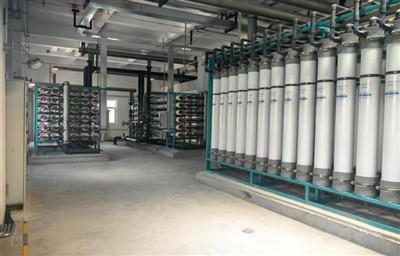
3. Membrane concentration reduction: Using technologies such as ultrafiltration (UF), reverse osmosis (RO), disc tube reverse osmosis (DTRO), or nanofiltration (NF), the wastewater is significantly reduced in volume, increasing the recovery rate to over 90%, and reducing the load of the evaporation unit.
4. Salting-out treatment (optional): Using nanofiltration to selectively retain one-valent/two-valent ions, achieving the separation of sodium chloride and sodium sulfate, facilitating the resource recovery.
5. Terminal solidification: For concentrated water, evaporation crystallization (MVR/MEE), flue gas evaporation, or low-temperature flash drying is carried out to completely recover the moisture, and the pollutants are solidified and transported as crystals or dust.
V. Sewage Treatment Flow Chart