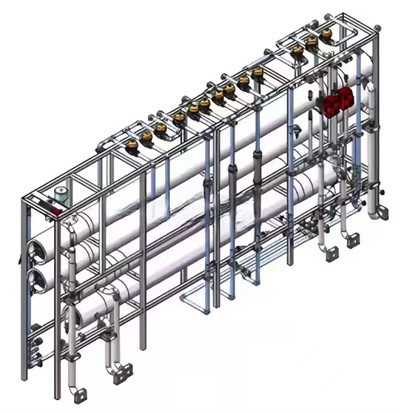

Hey there! As a supplier of Fenton reactors, I've seen firsthand the many benefits these systems bring to wastewater treatment and other industrial processes. But like any technology, Fenton reactors aren't without their drawbacks. In this blog post, I'll be diving into some of the disadvantages of using a Fenton reactor.
High Chemical Consumption
One of the most significant drawbacks of Fenton reactors is the high consumption of chemicals. The Fenton process relies on the reaction between hydrogen peroxide ($H_2O_2$) and ferrous ions ($Fe^{2 +}$) to generate hydroxyl radicals ($\cdot OH$), which are powerful oxidants that can break down organic pollutants. However, both hydrogen peroxide and ferrous salts can be quite expensive, especially when treating large volumes of wastewater.
The amount of chemicals required depends on the concentration of pollutants in the wastewater and the desired level of treatment. In some cases, the cost of chemicals can be a major barrier to the widespread adoption of Fenton reactors. For example, if you're dealing with a highly contaminated wastewater stream, you may need to use a large amount of hydrogen peroxide and ferrous salts to achieve the desired treatment efficiency. This can quickly add up, making the process economically unviable for some businesses.
Sludge Generation
Another disadvantage of Fenton reactors is the generation of sludge. During the Fenton process, the ferrous ions react with the hydrogen peroxide to form ferric hydroxide ($Fe(OH)_3$) precipitates. These precipitates, along with the oxidized organic matter, form a sludge that needs to be removed from the reactor.
The sludge generated by Fenton reactors can be difficult to handle and dispose of. It often contains high levels of heavy metals and other contaminants, which can pose environmental risks if not properly managed. Additionally, the disposal of sludge can be costly, as it may require specialized treatment or landfill disposal.
pH Sensitivity
The Fenton process is highly sensitive to pH. The optimal pH range for the Fenton reaction is typically between 2 and 4. Outside of this range, the reaction rate can be significantly reduced, and the efficiency of the process can be compromised.
Maintaining the appropriate pH level in a Fenton reactor can be challenging, especially when treating wastewater with a variable pH. In some cases, it may be necessary to add acid or base to the wastewater to adjust the pH to the optimal range. This can add to the cost and complexity of the treatment process.
Temperature Dependence
The Fenton reaction is also temperature-dependent. The reaction rate increases with increasing temperature, but at high temperatures, the hydrogen peroxide can decompose rapidly, reducing its effectiveness.
In practice, the temperature of the wastewater being treated can vary depending on the source and the season. Maintaining a consistent temperature in a Fenton reactor can be difficult, especially in large-scale applications. This can lead to fluctuations in the treatment efficiency and make it challenging to achieve consistent results.
Limited Treatment Capacity
Fenton reactors have a limited treatment capacity. The reaction rate of the Fenton process is relatively slow, and the amount of pollutants that can be treated in a given time is limited. This means that Fenton reactors may not be suitable for treating large volumes of wastewater or wastewater with high concentrations of pollutants.
In some cases, it may be necessary to use multiple Fenton reactors in series or parallel to increase the treatment capacity. However, this can increase the cost and complexity of the treatment system.
Potential for Secondary Pollution
The Fenton process can generate secondary pollutants, such as iron oxides and other by-products. These secondary pollutants can have a negative impact on the environment if not properly managed.
For example, the iron oxides generated during the Fenton process can accumulate in the wastewater and cause discoloration and turbidity. Additionally, the by-products of the Fenton reaction may contain toxic substances, such as heavy metals and organic compounds, which can pose a risk to human health and the environment.
Comparison with Alternative Technologies
When considering the disadvantages of Fenton reactors, it's important to compare them with alternative technologies. For example, Industrial Ozone Generator and Fenton Contact Oxidation are two alternative technologies that can be used for wastewater treatment.
Industrial ozone generators use ozone gas to oxidize organic pollutants in wastewater. Ozone is a powerful oxidant that can break down a wide range of organic compounds. Compared to Fenton reactors, ozone generators have a higher reaction rate and can treat wastewater more quickly. Additionally, ozone generators do not generate sludge, which can reduce the cost and complexity of the treatment process.
Fenton contact oxidation is a modified version of the Fenton process that uses a catalyst to increase the reaction rate. This technology can be more efficient than traditional Fenton reactors and can treat wastewater with higher concentrations of pollutants.
Conclusion
While Fenton reactors have many advantages, they also have several disadvantages that need to be considered. The high chemical consumption, sludge generation, pH sensitivity, temperature dependence, limited treatment capacity, and potential for secondary pollution are all factors that can make the Fenton process less attractive in some applications.
However, it's important to note that the disadvantages of Fenton reactors can be mitigated through proper design, operation, and maintenance. By carefully selecting the appropriate chemicals, controlling the pH and temperature, and managing the sludge, it's possible to achieve high treatment efficiency and minimize the environmental impact of the Fenton process.


If you're considering using a Fenton reactor for your wastewater treatment needs, I encourage you to contact us to discuss your specific requirements. Our team of experts can help you determine if a Fenton reactor is the right solution for your application and provide you with the support and guidance you need to ensure the success of your project.
References
- Pignatello, J. J., Oliveros, E., & MacKay, A. (2006). Advanced oxidation processes for organic contaminant destruction based on the Fenton reaction and related chemistry. Critical Reviews in Environmental Science and Technology, 36(1), 1-84.
- Neyens, E., & Baeyens, J. (2003). A review of classic Fenton's peroxidation as an advanced oxidation technique. Journal of Hazardous Materials, 98(1-3), 33-50.
- Sun, Y., & Pignatello, J. J. (1992). Kinetics of ferrous ion oxidation by hydrogen peroxide in homogeneous aqueous solution. Environmental Science & Technology, 26(12), 2410-2415.