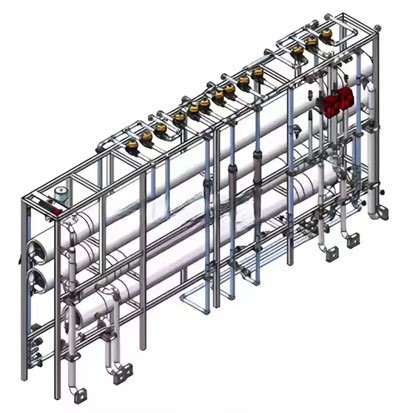

What are the limitations of a membrane rack?
As a membrane rack supplier, I've witnessed firsthand the widespread use and significance of membrane racks in various industries, especially in water treatment and separation processes. Membrane racks play a crucial role in supporting and housing membranes used for filtration, reverse osmosis, and ultrafiltration. However, like any technology, membrane racks come with their own set of limitations. In this blog, we'll explore these limitations to provide a comprehensive understanding for potential users and industry professionals.
1. Limited Capacity
One of the primary limitations of a membrane rack is its limited capacity. The physical size of the rack determines the number of membranes it can hold. In large - scale industrial applications, where high - volume water treatment or separation is required, a single membrane rack may not be sufficient. For example, in a large municipal water treatment plant, the demand for clean water can be in the millions of gallons per day. A standard membrane rack may only be able to process a fraction of this volume, necessitating the use of multiple racks. This not only increases the initial investment but also requires more space for installation and maintenance.
Moreover, as the number of membranes in a rack increases, the flow distribution within the rack can become uneven. This can lead to some membranes being over - utilized while others are under - utilized, reducing the overall efficiency of the system. For instance, in a Ultrafiltration Membrane System, if the flow distribution is not properly balanced, some membranes may clog faster than others, leading to frequent membrane replacements and increased operating costs.
2. Compatibility Issues
Membrane racks are designed to work with specific types of membranes. Different membranes have different physical and chemical properties, such as pore size, material composition, and operating pressure. A membrane rack that is designed for a particular type of membrane may not be compatible with other types. For example, a membrane rack designed for ultrafiltration membranes may not be suitable for reverse osmosis membranes due to differences in operating pressure and membrane configuration.
This compatibility issue can be a significant limitation when a user needs to upgrade or change the type of membranes in their system. They may have to purchase a new membrane rack, which can be a costly and time - consuming process. Additionally, if a supplier offers a new and improved membrane that is not compatible with the existing rack, the user may be reluctant to adopt the new technology.
3. Maintenance and Cleaning Challenges
Membrane racks require regular maintenance and cleaning to ensure optimal performance. Over time, membranes can become fouled with contaminants such as bacteria, algae, and suspended solids. Cleaning the membranes within the rack can be a complex and labor - intensive process. The design of the rack may make it difficult to access all parts of the membranes for cleaning. For example, in a tightly packed membrane rack, it may be challenging to clean the areas between the membranes effectively.
Furthermore, the cleaning chemicals used to clean the membranes can be corrosive to the rack material. If the rack is made of a material that is not resistant to these chemicals, it can lead to damage and reduced lifespan of the rack. For instance, a Carbon Steel Membrane Rack may be susceptible to corrosion if exposed to strong cleaning agents over time.


4. Cost
The cost of a membrane rack can be a significant limitation, especially for small - scale operations or budget - constrained projects. The initial purchase price of a high - quality membrane rack can be substantial, and this does not include the cost of the membranes themselves. Additionally, the installation and commissioning of the rack require specialized skills and equipment, which can add to the overall cost.
In addition to the upfront costs, the long - term operating costs associated with a membrane rack can also be high. These include the cost of membrane replacement, energy consumption, and maintenance. For example, in a Large Reverse Osmosis System, the energy required to operate the pumps and maintain the pressure for membrane filtration can be a significant expense.
5. Space Requirements
Membrane racks can be bulky and require a significant amount of space for installation. In facilities where space is limited, such as in some industrial plants or urban water treatment facilities, finding adequate space for a membrane rack can be a challenge. This can limit the number of racks that can be installed, which in turn affects the overall capacity of the system.
Moreover, the layout of the membrane rack within the facility needs to be carefully planned to ensure proper access for maintenance and operation. If the rack is not installed in a well - planned manner, it can lead to difficulties in performing routine tasks such as membrane replacement and cleaning.
6. Sensitivity to Operating Conditions
Membrane racks are sensitive to operating conditions such as temperature, pressure, and pH. Deviations from the recommended operating conditions can have a significant impact on the performance and lifespan of the membranes and the rack itself. For example, high temperatures can cause the membrane material to degrade, leading to reduced filtration efficiency. Similarly, high pressures can cause the membranes to rupture or the rack to deform.
Maintaining the optimal operating conditions requires sophisticated control systems and monitoring equipment. This adds to the complexity and cost of operating the membrane rack system.
7. Limited Flexibility
Once a membrane rack is installed, it can be difficult to make changes to its configuration. For example, if a user wants to increase the capacity of the system or change the type of membranes, it may require significant modifications to the rack. This lack of flexibility can be a limitation in industries where the requirements are constantly changing.
In conclusion, while membrane racks are an essential component in many water treatment and separation processes, they do have several limitations. These limitations include limited capacity, compatibility issues, maintenance and cleaning challenges, high cost, space requirements, sensitivity to operating conditions, and limited flexibility. However, by being aware of these limitations, users can make more informed decisions when selecting and operating membrane rack systems.
If you are considering purchasing a membrane rack for your application, we encourage you to contact us for a detailed discussion. Our team of experts can help you understand how to overcome these limitations and select the most suitable membrane rack for your needs. We look forward to the opportunity to work with you and contribute to the success of your project.
References
- Cheryan, M. (1998). Ultrafiltration and Microfiltration Handbook. Technomic Publishing Company, Inc.
- Mulder, M. (1996). Basic Principles of Membrane Technology. Kluwer Academic Publishers.
- Baker, R. W. (2004). Membrane Technology and Applications. John Wiley & Sons.