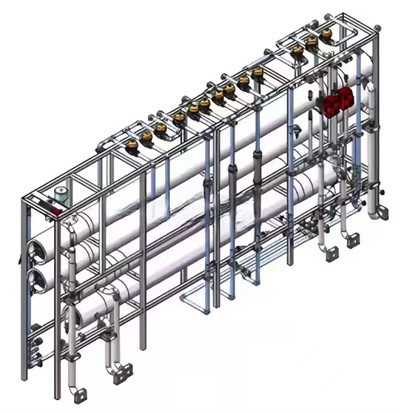

What is the material of the filter tank body?
As a supplier of Quartz Sand Filter Tank, I often get asked about the materials used for filter tank bodies. The choice of material for a filter tank body is crucial as it directly impacts the tank's performance, durability, and cost - effectiveness. In this blog, I'll explore the common materials used for filter tank bodies and their characteristics.
1. Stainless Steel
Stainless steel is one of the most popular materials for filter tank bodies. It offers several advantages that make it a top choice in many applications.
Corrosion Resistance: Stainless steel has excellent corrosion resistance, which is essential when dealing with water and various chemicals. Whether it's fresh water, saltwater, or slightly acidic or alkaline solutions, stainless steel can withstand the corrosive effects over a long period. This makes it suitable for both domestic and industrial water treatment systems. For example, in a seawater desalination plant, a stainless - steel filter tank can resist the high salt content in the water without significant degradation.
Strength and Durability: It is a strong and durable material. Stainless - steel filter tanks can withstand high pressure and mechanical stress. They are less likely to crack or deform under normal operating conditions. This durability ensures a long service life, reducing the need for frequent replacements. In industrial settings where large - scale water treatment is required, the robustness of stainless - steel tanks is highly valued.
Hygiene: Stainless steel is a hygienic material. It is easy to clean and disinfect, which is important in applications where water quality is a concern, such as in drinking water treatment. The smooth surface of stainless steel prevents the growth of bacteria and other microorganisms, ensuring that the filtered water remains clean and safe.
However, stainless - steel filter tanks can be relatively expensive compared to some other materials. The initial investment may be higher, but the long - term benefits of durability and performance often justify the cost.
2. Fiberglass Reinforced Plastic (FRP)
Fiberglass reinforced plastic is another commonly used material for filter tank bodies.
Lightweight: One of the significant advantages of FRP is its lightweight nature. This makes it easier to transport and install, especially in locations where heavy equipment is difficult to access. For example, in remote areas or on rooftops where space and weight limitations are a concern, FRP filter tanks are a practical choice.
Corrosion Resistance: Similar to stainless steel, FRP has good corrosion resistance. It can resist a wide range of chemicals, making it suitable for different water treatment applications. Whether it's treating industrial wastewater with various contaminants or filtering water in a swimming pool, FRP tanks can handle the corrosive environment.


Cost - Effective: FRP filter tanks are generally more cost - effective than stainless - steel tanks. The lower material and manufacturing costs make them an attractive option for budget - conscious customers. They also require less maintenance, which further reduces the overall cost of ownership.
However, FRP may not be as strong as stainless steel in high - pressure applications. It can also be more prone to damage from physical impacts compared to stainless - steel tanks.
3. Carbon Steel
Carbon steel is a traditional material for filter tank bodies.
High Strength: Carbon steel has high strength, which allows it to withstand high pressures. It is commonly used in large - scale industrial water treatment systems where high - volume filtration is required. For example, in power plants or large manufacturing facilities, carbon - steel filter tanks can handle the high - pressure water flow.
Low Cost: Carbon steel is relatively inexpensive compared to stainless steel. This makes it a cost - effective option for large - scale projects. However, carbon steel is prone to corrosion, especially in the presence of moisture and oxygen.
Coating Requirements: To prevent corrosion, carbon - steel filter tanks need to be coated. Common coatings include epoxy coatings, which provide a protective layer against rust and corrosion. Regular inspection and maintenance of the coating are necessary to ensure the long - term performance of the tank.
4. Polyethylene
Polyethylene is a plastic material that is also used for filter tank bodies.
Chemical Resistance: Polyethylene has good chemical resistance, making it suitable for filtering water with various chemicals. It can resist acids, alkalis, and many organic solvents. This makes it a good choice for applications such as chemical processing plants or laboratories where the water may contain corrosive substances.
Lightweight and Easy to Install: Similar to FRP, polyethylene is lightweight and easy to install. It can be molded into different shapes and sizes, allowing for customization according to specific requirements.
Low Cost: Polyethylene filter tanks are generally inexpensive. They are a popular choice for small - scale water treatment systems, such as home water filtration units or small - business applications.
However, polyethylene may not be suitable for high - temperature applications as it can deform at relatively low temperatures.
Choosing the Right Material for Your Filter Tank
When choosing the material for a filter tank body, several factors need to be considered:
Application: The type of water or fluid to be filtered is a crucial factor. If the water contains corrosive chemicals, materials like stainless steel or FRP may be more suitable. For applications where high pressure is involved, stainless steel or carbon steel may be the better choice.
Budget: The cost of the filter tank is an important consideration. If you have a limited budget, materials like polyethylene or carbon steel may be more appropriate. However, it's important to balance the initial cost with the long - term maintenance and replacement costs.
Size and Location: The size of the filter tank and its installation location also play a role. If the tank needs to be transported to a remote area or installed in a confined space, lightweight materials like FRP or polyethylene may be preferred.
As a supplier of Quartz Sand Filter Tank, we offer a variety of filter tank options made from different materials to meet the diverse needs of our customers. We also supply Activated Carbon Filter Tank and other types of Filter Tank.
If you are in the market for a filter tank, whether it's for a small - scale domestic application or a large - scale industrial project, we can provide you with professional advice and high - quality products. We invite you to contact us to discuss your specific requirements and start a procurement negotiation. Our team of experts is ready to assist you in finding the perfect filter tank solution for your needs.
References
- Water Treatment Handbook, various authors
- Materials Science for Engineers, John Doe
- Industrial Filtration Technology, Jane Smith