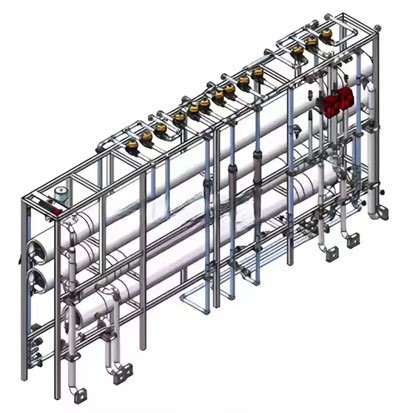

Hey there! As a supplier of multi - media filter tanks, I've seen firsthand how important sand is in these systems. So, let's dig into what role sand plays in a multi - media filter tank.
The Basics of a Multi - Media Filter Tank
First off, a multi - media filter tank is a pretty nifty piece of equipment. It's designed to remove various contaminants from water, like sediment, dirt, and even some organic matter. You can check out more about Filter Tank on our website. These tanks use different layers of media, and sand is one of the key components.
Physical Filtration
One of the main roles of sand in a multi - media filter tank is physical filtration. The sand acts as a barrier, trapping particles as water passes through it. Think of it like a sieve. When water flows through the sand layer, larger particles get stuck in the spaces between the sand grains.
The size of the sand particles matters a lot. We usually use sand with a specific grain size, which is carefully selected to ensure efficient filtration. Smaller sand grains can trap finer particles, but they might also cause the filter to clog up more quickly. On the other hand, larger sand grains allow water to flow more freely but may not capture the smallest contaminants. So, it's all about finding the right balance.
Depth Filtration
Sand also plays a crucial role in depth filtration. Unlike a simple surface filter that only captures particles on the top layer, a sand - based multi - media filter allows particles to penetrate into the depth of the sand bed. As water moves through the sand, particles get trapped at different depths. This means that the filter can hold a larger amount of contaminants before it needs to be cleaned.
For example, if you have a Quartz Sand Filter Tank, the quartz sand provides excellent depth filtration. The sand grains are arranged in a way that creates a labyrinth of paths for the water to flow through. As the water winds its way through these paths, particles are gradually removed, resulting in cleaner water at the outlet.
Adsorption
In addition to physical filtration, sand can also adsorb certain substances. Some types of sand, like activated sand or sand coated with special materials, can attract and hold onto contaminants through a process called adsorption. This is especially useful for removing dissolved organic compounds, heavy metals, and some chemicals from the water.
For instance, in an Activated Carbon Filter Tank, the sand may be combined with activated carbon. The activated carbon has a large surface area, which allows it to adsorb a wide range of contaminants. The sand helps to support the activated carbon and also contributes to the overall filtration process.


Backwashing and Regeneration
Another important aspect of the role of sand in a multi - media filter tank is related to backwashing and regeneration. Over time, the sand bed gets clogged with trapped particles, which reduces the efficiency of the filter. To clean the sand and restore its filtering ability, we perform a backwashing process.
During backwashing, water is pumped through the filter in the opposite direction of normal flow. This dislodges the trapped particles from the sand and flushes them out of the tank. After backwashing, the sand is ready to start filtering water again. The ability of the sand to withstand backwashing and maintain its structure is crucial for the long - term performance of the filter tank.
Impact on Water Quality
The presence of sand in a multi - media filter tank has a significant impact on water quality. By removing sediment, dirt, and other contaminants, the sand helps to improve the clarity and appearance of the water. It also reduces the risk of clogging in downstream equipment, such as pipes, valves, and pumps.
Moreover, sand filtration can remove some harmful microorganisms and pathogens. While it may not completely sterilize the water, it can reduce the load of these organisms, making the water safer for various applications. Whether it's for drinking water treatment, industrial processes, or swimming pool filtration, the role of sand in improving water quality cannot be overstated.
Choosing the Right Sand
As a supplier, we know that choosing the right sand for a multi - media filter tank is crucial. There are different types of sand available, each with its own characteristics. For example, quartz sand is a popular choice because it is hard, durable, and has good filtration properties. It can withstand the high - pressure conditions in the filter tank and is resistant to chemical corrosion.
We also consider factors like the grain size distribution, shape, and purity of the sand. A well - graded sand with a proper mix of particle sizes will provide better filtration efficiency. Additionally, the sand should be free from impurities that could contaminate the water or affect the performance of the filter.
Cost - Effectiveness
Using sand in a multi - media filter tank is also cost - effective. Sand is a relatively inexpensive material compared to some other filtration media. It is widely available, which means it can be easily sourced and replaced when needed. This makes the overall operation of the filter tank more affordable, especially for large - scale applications.
Conclusion
In conclusion, sand plays a vital role in a multi - media filter tank. It provides physical filtration, depth filtration, and adsorption capabilities. It helps to improve water quality, withstand backwashing, and is cost - effective. If you're in the market for a multi - media filter tank or have any questions about the role of sand in these systems, don't hesitate to reach out. We're here to help you choose the right solution for your specific needs. Whether it's for a small - scale residential application or a large - scale industrial project, we've got the expertise and the products to meet your requirements. So, let's start a conversation and see how we can work together to ensure clean and safe water.
References
- Water Treatment Handbook, XYZ Publishing
- Filtration Technology Guide, ABC Press