Beverage fruit juice wastewater treatment solution
The global beverage market size has reached 1.6 trillion US dollars by 2025, and is expected to grow to 2.2 trillion US dollars by 2030. Among them, juice is an important subcategory, with a market size of approximately 152 billion US dollars in 2023, and is expected to steadily expand at a rate of about 5% per year in the next five years.
The global beverage industry is in a period of structural transformation, with health, functionality, and sustainability becoming the core driving forces. Although carbonated beverages still account for a large share (about 240 billion US dollars in 2024), their growth has slowed down, while sugar-free, functional, plant-based, and natural juice products are accelerating their rise. Juice beverages, with their "natural" and "nutritious" attributes, show stable growth potential in the context of rising consumer health awareness.
1. Overview of Customers for Beverage Juice Processing Wastewater Treatment
During the production of juice beverages, a large amount of high-concentration organic wastewater is generated, mainly from fruit cleaning, crushing and juicing, canning bottle washing, equipment cleaning, and ground flushing. This type of water is rich in organic matter, suspended solids, ammonia nitrogen, and phosphorus, with high pollutant concentration and good biodegradability but difficult to treat. If not properly treated and directly discharged, it will seriously pollute the water body and potentially lead to eutrophication. Therefore, countries around the world require relevant enterprises to build or upgrade wastewater treatment facilities, which has given rise to a huge demand for professional services.
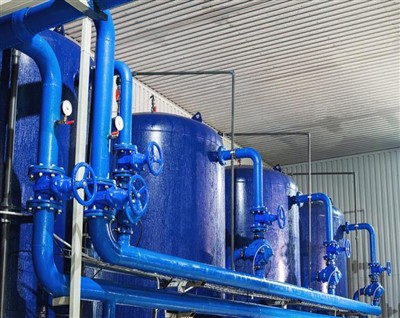
Jinan Guangbo Environmental Protection has customized an "pre-treatment + anaerobic + aerobic + deep decolorization" integrated process for the high sugar, high COD, and high color of beverage juice wastewater, which can efficiently degrade sugar-based organic substances and remove pigment substances, achieving stable and compliant effluent and allowing for on-demand reuse. Its self-developed efficient sedimentation tank and modular reactor significantly save land use, shorten installation cycles, and adapt to the seasonal production load fluctuations of juice factories. At the same time, it integrates biogas recovery and sludge fertilizer production resource utilization schemes, ensuring treatment effectiveness while reducing operation costs, forming a "compliant discharge + resource recycling" dual competitive advantage.


Pictures of producing beverages and juices
II. Wastewater Treatment for Beverage and Juice Processing
Wastewater Source
During the production process of beverages, especially fruit juices, a large amount of water is used for raw material cleaning, equipment disinfection, product blending, etc. These operations inevitably generate a large amount of wastewater. If it is not properly treated and directly discharged, it will impose a heavy burden on the aquatic ecosystem. Therefore, identifying the source of the wastewater is the prerequisite for formulating a scientific treatment plan.
1. Wastewater from fruit cleaning: In the initial stage of juice production, fresh or refrigerated fruits need to be washed multiple times to remove surface dirt, pesticide residues, and fruit peel debris. This process generates a large amount of turbid wastewater containing pulp fibers, pectin, sugar, and suspended solids, which is one of the main sources of organic pollutants.
2. Wastewater from crushing and juicing processes: After fruits are crushed, pulped, and pressed, some juice spills or remains in the equipment, while fruit residues, pits, and other solid waste also carry juice and enter the drainage system. Such wastewater contains high concentrations of fructose, glucose, sucrose, and organic acids (such as malic acid, citric acid), resulting in a significant increase in chemical oxygen demand (COD), up to tens of thousands of mg/L.
3. Wastewater from bottle washing and sterilization in the canning section: Before filling, bottles need to be sterilized by high-temperature steam or cleaned with chemical agents, followed by rinsing with clean water. This process not only involves a large amount of water but also may contain alkaline cleaning agents, disinfection by-products (such as peracetic acid), and trace sugar solutions, presenting intermittent discharge characteristics that affect the overall water quality stability.
4. Periodic rinsing wastewater of production equipment and pipelines: During each batch of product replacement or equipment maintenance, the reactors, conveying pipelines, pumps, valves, etc. must be thoroughly cleaned. Such wastewater is usually discharged in a concentrated manner, causing a high load impact in a short period of time. It contains residual juice, flavorings, food additives, and cleaning agents, with a large pH value fluctuation.
5. Floor flushing water in the workshop: After production, the floor is cleaned, and the scattered juice, fruit residues, and dust are flushed into the sewer. Although the single water volume is not large, it still contributes a considerable amount of suspended solids (SS) and organic load, especially in summer, where acidification and spoilage phenomena are prone to occur.
6. Wastewater from the concentration and condensation unit: During juice concentration, the evaporated condensate water appears clear but actually contains volatile organic components and low-molecular-weight sugars. Analysis shows that its COD can reach 1000–1500 mg/L, making it a "hidden pollution source", which is often overlooked but needs to be included in unified treatment.
7. Domestic sewage and drainage from other auxiliary areas: The water used by employees in the factory, including the cafeteria, bathrooms, and shower rooms, is also incorporated into the sewage treatment system. The water quality of this part is relatively stable, mainly containing nitrogen, phosphorus nutrients, and oils, although the concentration is low, it still needs to be treated in coordination to prevent the risk of eutrophication.


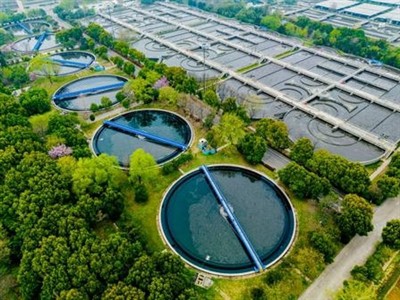
Comparison of pictures showing polluted water and pictures showing treated water
III. Process Flow for Treating Wastewater from Juice Beverage Production
The wastewater generated during the juice beverage production process has characteristics such as high organic content, abundant suspended solids, significant fluctuations in water quality and volume, and a low pH value. The main sources include fruit cleaning, juice extraction, equipment cleaning, and canning rinsing, among others. The wastewater contains a large amount of sugars, pectin, fruit residues, cellulose, and fruit acids, etc. Due to its good biodegradability (with a high BOD/COD ratio), it is suitable for treatment using a biological method primarily.
Main processing flow modules
1. Pretreatment stage: Removing large particles and regulating water quality
This stage aims to reduce the burden on subsequent biological treatment and prevent blockages and shock loads.
Grate: Intercept large suspended solids such as fruit peels and pulp.
Equalization tank: Balance water quality and volume to avoid fluctuations caused by production intervals; some systems also include agitation or pre-aeration to prevent fruit debris from fermenting and decaying.
Coagulation sedimentation/aerobic dewatering: Add PAC and PAM to make fine suspended solids and pectin coagulate into flocs, which are then separated through sedimentation or dissolved air flotation. Aerobic flotation is particularly suitable for removing light colloidal substances.
2. Biological treatment stage: The core for degrading organic pollutants
Utilize microbial metabolic processes to decompose soluble organic matter.
The biological treatment stage is the core of wastewater treatment, mainly employing biological treatment technologies such as anaerobic biological reactors, aerobic activated sludge methods, and biofilm methods to remove organic matter, nitrogen, and phosphorus pollutants in the wastewater. The specific steps are as follows:
Anaerobic biological treatment: Includes upflow anaerobic sludge bed (UASB), anaerobic expanded bed (UASB), and internal circulation anaerobic fluidized bed (IC). Anaerobic biological treatment can further increase the COD removal rate, reduce the burden of subsequent treatment, and produce biogas.
Aerobic biological treatment: Aerobic biological treatment technologies include activated sludge method and biofilm method. The activated sludge method uses aeration to mix sludge and wastewater thoroughly, utilizing microorganisms to degrade organic matter; the biofilm method utilizes microorganisms on the biofilm to degrade organic matter. Aerobic biological treatment can remove most organic matter and nitrogen and phosphorus pollutants.
In actual engineering, a "anaerobic + aerobic" combined process is often adopted, which is both energy-saving and ensures stable and compliant effluent discharge.
3. Deep treatment stage: Ensuring effluent quality
Further purify the biochemical effluent to meet discharge or reuse standards.
Secondary sedimentation tank: Achieve sludge-water separation and return activated sludge.
Aerobic biological filter (BAF): Has both biological degradation and filtration functions, and can further remove residual COD and ammonia nitrogen.
Disinfection: Use ultraviolet or ozone to kill pathogenic microorganisms, ensuring hygiene and safety.
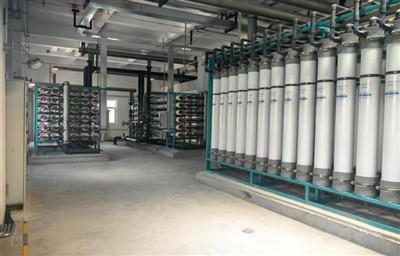
Membrane treatment (optional): Such as ultrafiltration and nanofiltration for high-quality reclaimed water, achieving water resource recycling.
Can be equipped with a sewage treatment flow chart
Industrial wastewater → Bar screen machine → Equalization tank → Coagulation and flotation → Anaerobic biochemical treatment → Aerobic biochemical treatment → Advanced treatment → Discharge or reuse
IV. Specific Case Studies on Wastewater Treatment for Beverage and Juice Processing
Guangdong Farmer Mountain Spring HeYuan Sewage Treatment Project

The sewage treatment measures for the Guangdong Farmer Mountain Spring HeYuan Project are as follows:
• Separate sewage treatment: Implement the "rainwater and sewage separation" system. Rainwater is discharged into the municipal stormwater pipeline; the water before the membrane used for producing pure water is treated as clean sewage and discharged into the municipal stormwater network. The production wastewater is treated by the sewage treatment station established by our Guangbo Environmental Protection Company, and the domestic sewage is pre-treated by the three-level septic tanks.
• Sewage treatment standards: The treated production wastewater must meet the "Water Pollutant Discharge Limits" (DB44/26-2001) of the second period of Grade I standards in Guangdong Province, and then be discharged into the municipal sewage network and further treated in the urban sewage treatment plant. The domestic sewage is pre-treated by the three-level septic tanks to meet the "Water Pollutant Discharge Limits" (DB44/26-2001) of the second period of Grade III standards, and then discharged into the municipal sewage network and finally enters the urban sewage treatment plant for centralized treatment.
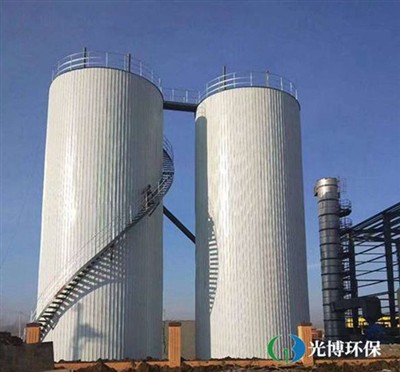
The third-generation IC anaerobic reactor and supporting project of China Grain Sugar Industry Holding Co., Ltd.
I. Project Overview:
Project Name: Third Generation IC Anaerobic Reactor and Supporting Project of China Grain Sugar Industry Holding Co., Ltd.
II. Project Introduction:
China Grain Tunhe Tomato Co., Ltd. is a wholly-owned subsidiary of China Grain Sugar Industry Holding Co., Ltd. Its main business is processing and selling tomato and other fruit and vegetable products. This cooperation mainly focuses on the treatment of wastewater generated during the production of tomato products. This project is the third-generation IC anaerobic reactor and supporting project of China Grain Sugar Industry Holding Co., Ltd. The designed treatment capacity of this project is 4000 m³/d (24-hour continuous operation), with an upward flow rate of 3 m/h and a volumetric load of 6.17 kg COD/(m/d).
III. Advantages of Guangbo Environmental Protection Technology:
Guangbo Environmental Protection can treat wastewater to meet the standard for reuse. It is economical, simple, and has the characteristics of low requirements for the original water quality, simple treatment process and equipment, convenient operation, small equipment maintenance volume, low energy consumption, and stable operation and treatment effect.
IV. Introduction of Guangbo Environmental Protection:
Guangbo Environmental Protection has a number of technical inventions and utility model patents. Especially in anaerobic treatment technologies such as IC anaerobic tanks and UASB anaerobic reactors, it has accumulated a large amount of construction experience. Our IC anaerobic reactor technology is advanced, with comprehensive technology and higher cost performance, and has won the favor of all customers and subcontractors. We look forward to contacting you if you have any related wastewater treatment needs and achieving win-win cooperation.