Corn starch wastewater treatment solution
China is already a core force in the global corn starch industry, accounting for 41.7% of global production in 2023, with a total output exceeding 200 billion yuan. Combined with derivative market data, the global market size for corn starch and related products should be around 500 billion yuan, and it will steadily grow at a rate of approximately 5% per year. Among them, bio-based materials will become the main growth engine.
I. Overview of Customers for Corn Starch Wastewater Treatment
During the production of corn starch, a large amount of high-concentration organic wastewater is generated from processes such as soaking, germ separation, and fiber washing. If this wastewater is discharged directly without treatment, it will severely deplete the dissolved oxygen in water bodies and damage the environment. Therefore, environmental protection regulations in various countries require enterprises to build effective treatment systems. With stricter environmental policies and the increasing awareness of sustainable development, corn starch production enterprises have become the main customer group for wastewater treatment equipment and technical services.
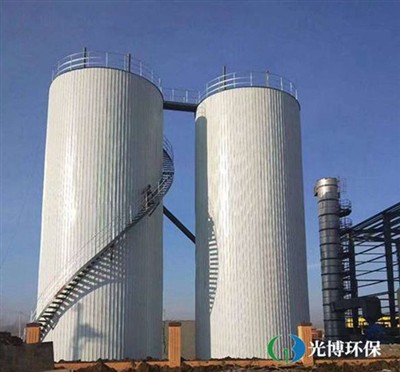
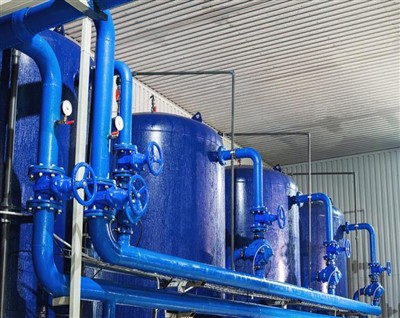
Jinan Guangbo Environmental Technology Co., Ltd. has customized an enhanced pre-treatment + efficient anaerobic + SBR aerobic combined process for the high COD, high fluctuation, and inhibitor-containing characteristics of corn starch wastewater. The total COD removal rate exceeds 99%, and the effluent is stable and meets standards and can be reused. The self-developed anaerobic reactor has strong anti-shock performance and can decompose sulfate inhibition, simultaneously recover biogas for energy supply + pre-treatment to recover plant protein, achieving a resource closed loop and reducing the cost per ton of water. It has core equipment self-research and production capabilities and rich engineering experience, providing design - manufacturing - commissioning - operation integrated project services, and is suitable for water and wastewater fluctuations during the peak production period.


Pictures showing the production process of corn starch
II. Treatment of Corn Starch Wastewater Wastewater Source
Corn starch production is a typical water-intensive industry. For every 1 ton of corn processed, 5-13 m³ of wastewater is generated. If these wastewater is discharged directly without treatment, due to the high concentration of organic matter, it will rapidly deplete the dissolved oxygen in the water body, causing fish suffocation and making the water black and stinky, severely damaging the ecological environment. Therefore, identifying the source of the wastewater is the prerequisite for designing an effective treatment plan.
According to the production process flow, the corn starch wastewater mainly comes from the following key stages:
1. Corn soaking: Using sulfurous acid solution to soften the corn, the soaking water contains soluble proteins, sugars, organic acids, and sulfites, with a very high COD concentration (up to 50,000–80,000 mg/L), which belongs to high-concentration process wastewater.
2. Germ separation and washing: During the process of removing the corn germ, the rinsing water carries fine particles and organic matter, forming medium to high-concentration wastewater.
3. Fiber washing: When extracting residual starch from corn residue, a large amount of rinsing water is discharged, containing cellulose, starch particles, and other suspended substances.
4. Protein filtration and flotation concentration: The drainage from the process of recovering corn protein is called "protein water", with a large volume and rich in protein, with a COD of approximately 4,000–8,000 mg/L.
5. Equipment and floor rinsing water: Including the cleaning of crushers, separators, pipelines, etc., as well as the floor rinsing in the workshop, although the concentration is low, the total amount cannot be ignored.
6. Evaporation condensate: Some enterprises evaporate and concentrate corn slurry to produce corn slurry products. This process generates steam condensate water, which also constitutes a stream of wastewater, with COD generally below 1,000–2,000 mg/L.

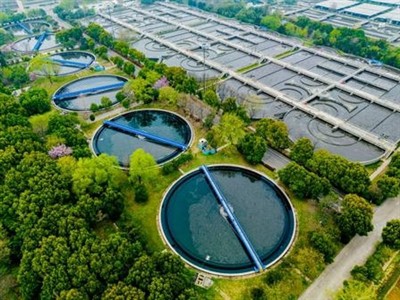
Comparison of pictures showing polluted water and pictures showing treated water
III. Process Flow for Treating Corn Starch Wastewater
During the production process of corn starch, a large amount of highly concentrated organic wastewater is generated, mainly from processes such as corn soaking, germ separation, fiber washing, and protein filtration. This type of wastewater has the following characteristics:
High organic matter concentration; contains relatively high concentrations of ammonia nitrogen, total nitrogen, and total phosphorus; has good biodegradability and is suitable for biological treatment; high content of suspended solids (SS).
Due to the high concentration of pollutants and large volume of water, if not properly treated, it will seriously damage the water body ecology. Therefore, a multi-stage collaborative process is needed to achieve efficient purification.
1. Pre-treatment stage: Removal of suspended solids and water quality adjustment
This stage mainly removes a large amount of suspended solids (such as starch particles and protein residues) in the wastewater through physical and chemical methods to prevent blockage of subsequent equipment and improve processing efficiency.
Grate filtration: Removal of large particles.
Settling/aerated flotation: Separation of fine suspended solids using gravity sedimentation or dissolved air flotation technology.
Equalization tank: Balances water quality and quantity, facilitating stable operation afterwards.
pH adjustment: Since the raw water is acidic, alkaline substances are added to adjust the pH to neutral or slightly alkaline, which is conducive to the growth of anaerobic bacteria.
2. Anaerobic biological treatment: Efficient degradation of organic matter and production of biogas
This is the core process, using anaerobic microorganisms to break down large-molecule organic matter into methane and carbon dioxide, significantly reducing the COD load, and recovering energy.
Main processes include:
UASB (Upflow Anaerobic Sludge Bed): The most widely used, with a COD removal rate of up to 70%–90%;
IC (Internal Circulation Anaerobic Reactor) or EGSB (Expanded Granular Sludge Bed): Suitable for higher concentration wastewater, with strong shock resistance.
3. Aerobic biological treatment: Further removal of residual organic matter and nitrogen removal
The anaerobic effluent still contains some organic matter and ammonia nitrogen, which need to be further purified through the aerobic process.
Common processes include:
A/O method (Anoxic-Oxic): Achieves denitrification and nitrogen removal;
SBR (Sequential Batch Reactor): Flexible operation, adaptable to fluctuating loads;
Oxidation ditch + secondary sedimentation tank: Simple structure, easy maintenance.
4. Deep Treatment: Ensure that the effluent meets the standards or is suitable for reuse
To further improve the quality of the effluent, especially for reuse purposes, deep treatment is necessary.
Coagulation and sedimentation: Add flocculants such as PAC (polyaluminum chloride) to remove residual colloids and phosphates.
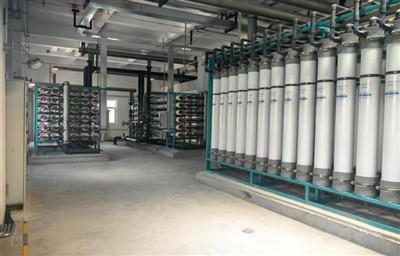
Membrane separation technology: Ultrafiltration (UF) + Reverse Osmosis (RO): Used for reclaimed water reuse, with high desalination rate.
Activated carbon adsorption: Remove color and trace non-biodegradable organic substances.
5. Sludge Treatment and Resource Utilization
The sludge generated at each stage is concentrated and dehydrated before being transported for disposal. The moisture content can be reduced from 99% to below 80%. Some enterprises also convert the sludge into fertilizers or feed materials for comprehensive utilization.
Can be equipped with a sewage treatment flow chart
Industrial Wastewater → Bar Screen Well → Coagulation and Flotation → Equalization Tank → Anaerobic Biochemical Treatment → Aerobic Biochemical Treatment → Advanced Treatment → Discharge or Reuse

IV. Specific Case Studies of Corn Starch Wastewater Treatment
Present the case in a combined graphic and textual format.
Shandong Baisheng Starch Wastewater Treatment Station - Professional Starch Wastewater Treatment Project

I. Project Overview:
Project Name: Professional Starch Wastewater Treatment Station in Shandong Baisheng
Wastewater Volume: The wastewater treatment plant is designed with a capacity of 3000 m³/d
Process Selection: GBIC anaerobic reactor (upflow anaerobic sludge bed) + contact oxidation process scheme is the main treatment process for the wastewater treatment plant
II. Company Overview:
Shandong Baisheng Starch Wastewater Treatment Station. We have participated in the construction of three phases:
Phase 1: Renovation of three IC anaerobic reactors. The result was: The IC anaerobic reactors of this wastewater treatment station were for sludge replenishment every year. After the renovation, the monthly production of granular sludge was approximately 200 tons, achieving profitability.
Phase 2: Renovation of the aerobic aging aeration device, replacing the original microporous aeration device with a long-life and easy-to-replace vortex aeration device.
Phase 3: Nitrogen and phosphorus upgrading of the wastewater station. The defect in the design of the previous environmental protection company for the removal of these substances has been remedied.
III. Introduction to Wastewater Treatment:
Commissioned by the BaiSheng starch wastewater treatment project team, Guangbo Environmental Protection Wastewater Treatment Company carried out the scheme design and construction of this starch wastewater treatment plant project. Based on the analysis and prediction of water volume and quality, the wastewater treatment plant was designed with a capacity of 3000 m³/d.
Based on the analysis and testing of the water quality of starch wastewater and the discharge requirements, after comparing the technical and economic performance of the treatment processes for the starch wastewater treatment plant, the GBIC anaerobic reactor (upflow anaerobic sludge bed) + contact oxidation process scheme was selected as the main treatment process for the wastewater treatment plant; The starch wastewater is a wastewater with good biodegradability, and its COD is high. Through our company's GIBC, a large amount of granular sludge (granular sludge can be sold externally) and a large amount of biogas (which can be used for boiler combustion and biogas power generation) can be produced, basically achieving zero-cost operation of the starch wastewater treatment station.
IV. Environmental Compliance:
After the completion of the wastewater station, it has been continuously operating for 3 years. The effluent has met the first-level discharge standard stipulated in the current "Sewage Comprehensive Discharge Standard" (GB8978-1996) of China, and a part of the benefits has been generated from the use of granular sludge and biogas produced during the starch wastewater treatment process.