Lotus root powder wastewater treatment solution
The global lotus root starch market size is expected to reach approximately 13 billion yuan in 2025 and grow to 17 billion yuan by 2030, with a compound annual growth rate (CAGR) of 5.5% during this period.
Production and capacity: The global lotus root starch production capacity has been continuously increasing, with China being the major producer, accounting for over 70% of the global output.
Consumer demand: The main consumer markets include China, Southeast Asia, Japan, and Chinese communities in Europe and America, among which the Chinese market holds a dominant position.
I. Customer Overview of Lotus Root Starch Production Wastewater Treatment
The main customers for the treatment of lotus root starch production wastewater are small and medium-sized lotus root starch processing enterprises, especially those in major production areas such as Hubei, Jiangsu, and Chongjiang, Yunnan. Their core demands focus on low cost, easy operation and maintenance, stable compliance with standards, and a high degree of attention to environmental compliance and resource potential.
Lotus root starch processing is a typical starch-based food industry. The wastewater is rich in soluble starch, sugars, suspended solids, and a small amount of volatile fatty acids, with a B/C ratio of 0.6–0.7, which is highly biodegradable but has significant fluctuations in water quality and quantity. With increasingly strict environmental requirements, enterprises are compelled to upgrade their treatment facilities.
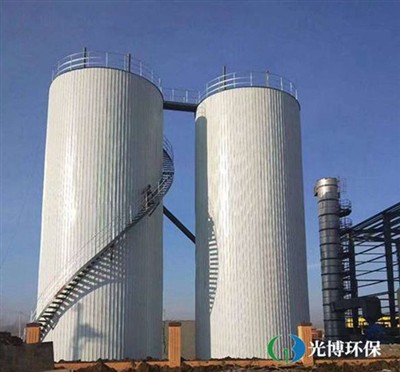
Jinan Guangbo Environmental Protection has developed a specialized process of "high-efficiency cyclone separation + anaerobic fermentation + aerobic degradation + deep clarification" to address the pain points of high starch, high suspended solids, high COD, and the tendency to clog equipment due to gelatinization in lotus root starch production wastewater. Relying on its self-developed anti-gelatinization pretreatment device, it can quickly intercept lotus root residue and suspended solids, break down starch colloids, and prevent subsequent equipment clogging. The process also has strong resistance to shock loads, adapting to the seasonal fluctuations in lotus root starch production, while achieving biogas recovery and utilization, and converting sludge into fertilizer. On the basis of ensuring stable and compliant effluent, it significantly reduces operation and maintenance costs, forming a core competitiveness of "strong process adaptability, stable operation, and resource recycling".


Pictures of lotus root starch production
II. Sources of Wastewater from Lotus Root Starch Production
The following are the main wastewater generation points in each process of lotus root starch production:
1. Raw material washing wastewater: Fresh lotus roots need to be thoroughly washed to remove mud and impurities before processing, which generates a large amount of wastewater containing suspended solids.
2. Steaming and boiling wastewater: Some processes require steaming and boiling lotus root segments to soften them, resulting in the discharge of high-temperature and high-organic matter waste liquid.
3. Wet grinding and starch extraction wastewater: After grinding lotus root blocks into pulp and adding water to extract the starch liquid, a large amount of wastewater rich in soluble sugars and proteins is produced at this stage.
4. Centrifugal separation and dewatering wastewater: When separating lotus root residue from starch milk through a centrifuge, yellowish wastewater containing fine fibers and residual starch is discharged.
5. Wastewater from workshop and equipment cleaning: Daily ground cleaning, pipeline washing, and equipment disinfection after production also generate a certain amount of low-concentration but continuous wastewater.
6. Domestic sewage: Domestic wastewater from factory employees (such as toilets and canteens) is usually treated together with production wastewater.


A comparison of pictures of polluted water and treated water
III. Process Flow of Wastewater Treatment for Lotus Root Starch Production
Due to the extremely high concentration of pollutants, a single treatment process is difficult to achieve stable compliance. Therefore, a multi-stage collaborative treatment process is commonly adopted, covering physical, chemical, and biological methods. The following is a typical process for treating soy protein wastewater, compiled from multiple actual engineering cases and technical literature:
1. Pretreatment stage
Pretreatment is the first step in wastewater treatment, with the main purpose of removing large particles and suspended solids from the wastewater to lay a foundation for subsequent treatment. Specific measures include:
Physical treatment: Through physical means such as filtration and sedimentation, suspended solids and large particles are effectively removed from the wastewater. For example, in the project of Shandong 𪶄 Source Food Co., Ltd., the blanching wastewater, equipment cleaning wastewater, grinding wastewater, and lotus root cleaning wastewater are settled and then enter the single-effect evaporator + condensing equipment together with the pickling wastewater and concentrated water from pure water preparation.
Chemical treatment: Advanced technologies such as chemical coagulation, neutralization, and oxidation are used to further degrade organic matter, heavy metal ions, and other harmful substances in the wastewater, ensuring a significant improvement in water quality.
2. Biological treatment stage
Biological treatment is a key step in removing organic matter from wastewater, mainly through the action of microorganisms to decompose organic matter into harmless substances. The goal of the biological treatment stage is to degrade organic matter and achieve simultaneous removal of nitrogen and phosphorus. Main processes include:
Anaerobic treatment: The IC reactor is suitable for high-concentration wastewater, with a volumetric loading rate of up to 15 kg COD/(m³·d) and strong resistance to shock loads. Key parameters: pH controlled at 6.8-7.5, temperature 35-38°C, carbon-nitrogen-phosphorus ratio (COD:N:P = 200:5:1).
Aerobic treatment: The SBR process (sequencing batch reactor), suitable for scenarios with large fluctuations in water volume, achieves nitrification and denitrification through time series control.
3. Advanced treatment and reuse
After pretreatment and biological treatment, the wastewater may still require advanced treatment to meet higher discharge standards or reuse requirements. Advanced treatment processes may include:
Coagulation sedimentation: Add PAC/PAM to remove remaining suspended solids and colloidal substances.
Sand filtration/carbon filtration: Filter out fine particles and reduce turbidity.
Advanced oxidation: Treat refractory organic matter with ozone oxidation or Fenton reagent, with a COD removal rate of ≥60%.
Sewage treatment process flow chart (optional)
Industrial wastewater → Filtration and sedimentation → Coagulation and neutralization → Advanced oxidation → Anaerobic biochemical treatment → Aerobic biochemical treatment → Filtration and disinfection → Discharge or reuse
IV. Specific Case Study on the Treatment of Lotus Root Starch Production Wastewater
Showcase cases in a combination of text and images.
Wastewater Treatment Project of Hubei Hanchuan Donghu Lotus Industry Co., Ltd.

I. Project Overview: Wastewater Treatment Project of Hubei Hanchuan Donghu Lotus Industry Co., Ltd.
II. Wastewater Profile: CODCr: ≤ 6000mg/L, designed wastewater volume: 260m³/d.
III. Project Introduction: Hubei Hanchuan Donghu Lotus Industry Co., Ltd. was established in 2007 and is located in Mahu Town, Hanchuan City. It is a limited liability company integrating deep processing and sales of lotus roots. The three-phase separator includes a canopy-shaped gas collection hood, with a cylindrical sedimentation chamber coaxially connected to the lower surface of the gas collection hood. The inner wall of the sedimentation chamber and the gas collection hood form a sedimentation space, and the outer wall of the sedimentation chamber and the gas collection hood form a gas collection space. The upper end of the sedimentation space is connected to a drainage pipe, and the gas collection space is connected to an exhaust chamber set on the upper surface of the gas collection hood. The lower end of the sedimentation chamber is connected to a reflector through multiple fixed columns, and an inlet communicating with the sedimentation space is formed between adjacent two fixed columns. On the one hand, a canopy-shaped gas collection hood is set, and a gas collection space is formed between the outer wall of the sedimentation chamber and the gas collection hood. This gas collection space has a large gas collection surface and high gas collection efficiency. On the other hand, the sedimentation chamber is set in a cylindrical shape and a drainage pipe is set for drainage, which is conducive to reducing the surface load of the inner wall of the sedimentation chamber and improving the solid-liquid separation effect. The use of a drainage pipe for drainage is conducive to discharging the relatively clear supernatant at the upper end of the sedimentation space.