Solution for the treatment of wastewater from traditional Chinese medicine extraction
In recent years, with the enhancement of health awareness, the acceleration of aging, and the rise of the "return to nature" consumption trend, the acceptance of traditional Chinese medicine (TCM) has continued to increase globally. Especially with strong policy support from China, the TCM industry has undergone comprehensive upgrades from planting, processing to research and development, driving rapid expansion of the market size. At the same time, the increasing demand for natural medicines and chronic disease prevention and treatment solutions in the international market has also prompted TCM to gradually go global.
The global market size of TCM is expected to reach approximately $210-264 billion by 2025 and will grow to approximately $513.6 billion by 2035, with the Chinese market accounting for half of the global market.
I. Overview of Customers for TCM Extraction Wastewater Treatment
The customers for TCM extraction wastewater treatment are mainly pharmaceutical enterprises and processing factories. They generally face challenges in treating high-concentration, difficult-to-degrade, and highly variable wastewater. The wastewater is complex in composition and has high concentrations, with significant pressure for environmental compliance. Customized solutions are needed to achieve stable compliance discharge or resource utilization. If such wastewater is not properly treated and directly discharged, it not only violates environmental regulations but also may have a significant impact on the ecological environment. Therefore, technical service providers with compliance treatment capabilities are becoming key partners in the industry's transformation and upgrading.


Pictures of the herbal extracts shown in the illustration
II. Treatment of Wastewater from Traditional Chinese Medicine Extraction
Wastewater source
Traditional Chinese medicine (TCM) extraction wastewater is industrial wastewater generated during the process of converting traditional chinese medicinal materials into medicines or extracts. This wastewater is produced due to the extensive use of water for treatment. It has complex components and high organic content. If not properly treated, it can cause severe pollution to the environment. Its sources span the entire TCM production process, and the characteristics of the wastewater vary at different stages.
According to the production process, TCM extraction wastewater mainly originates from the following key steps:
1.medicinal materials washing wastewater
Before extraction, thetraditional chinese medicinal materials need to be washed to remove soil, impurities, and pesticide residues. This process generates a large amount of wastewater containing suspended substances (such as sand, drug residue fragments), animal and plant oils, etc. This type of wastewater usually has a large volume but relatively low concentration.
2. Processing and boiling extraction wastewater
Wastewater from processes such as steaming, decoction, and reflux extraction contains high concentrations of polysaccharides, flavonoids, alkaloids, glycosides, pigments, and their hydrolysis products. Although this type of wastewater has a small volume, its COD (Chemical Oxygen Demand) is extremely high, reaching several thousand or even over 30,000 mg/L, with deep color and poor biodegradability.
3. Equipment and container cleaning wastewater
After extraction, wastewater from equipment, pipelines, reactors, and floor rinsing will be generated, containing residual drug solutions, solvents, and fine particles. This type of wastewater is intermittently discharged, with fluctuating water quality, increasing the difficulty of treatment.
4. Concentration and formulation process wastewater
During subsequent processes such as concentration, drying, granulation, and bottle washing, a certain amount of wastewater will also be generated, containing a small amount of organic matter and inorganic salts.


Comparison of pictures showing polluted water and pictures showing treated water
III. Treatment Process Flow for Wastewater from Traditional Chinese Medicine Extraction
The treatment process of wastewater from traditional Chinese medicine extraction is a complex and systematic procedure, aiming to effectively remove pollutants from the wastewater and achieve its compliance with discharge standards and resource recycling. The following is the treatment process of traditional Chinese medicine extraction wastewater based on the search results:
1. Pre-treatment
Pre-treatment is the first step in the treatment process of traditional Chinese medicine extraction wastewater, mainly aiming to remove large particles of suspended solids, adjust water quality and quantity, and reduce turbidity and color of the wastewater. Specific steps include:
Grate filtration: Remove large particles of suspended solids, such as medicinal fragments and plastic particles, to prevent blockage of subsequent treatment equipment.
Equalization tank: Balance water quality and quantity, adjust pH to an appropriate range, and create favorable conditions for subsequent biological treatment.
Coagulation sedimentation: Add coagulants to form flocs of suspended solids, colloidal particles, and organic substances in the wastewater, and remove them through sedimentation tanks to reduce turbidity and color of the wastewater.
2. Biological treatment
Biological treatment is the key step for removing organic matter from the wastewater, usually including two stages: anaerobic treatment and aerobic treatment.
Anaerobic treatment: For high-concentration organic wastewater, anaerobic treatment can be carried out first, using anaerobic microorganisms to decompose large molecular organic substances into small molecular organic substances, generating biogas as energy recovery, and reducing the COD (Chemical Oxygen Demand) of the wastewater.
Aerobic treatment: The wastewater after anaerobic treatment enters the aerobic treatment stage, using aerobic microorganisms to further degrade the organic matter in the wastewater and remove pollutants such as ammonia nitrogen and total phosphorus, making the wastewater meet discharge standards.
3. Deep treatment
Deep treatment is to further improve the quality of the effluent, removing tiny particles, organic matter, and inorganic salts. Specific methods include:
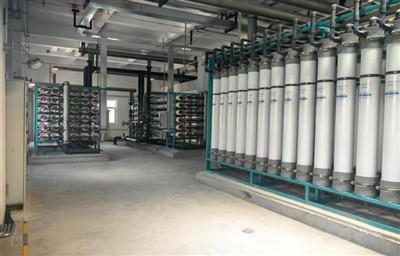
Membrane separation technology: Such as ultrafiltration and nanofiltration, through the selective permeability of semi-permeable membranes, remove tiny particles, organic matter, and inorganic salts from the wastewater, improving the quality of the effluent.
Adsorption method: Use activated carbon and other adsorbents to adsorb residual organic matter and pigments in the wastewater, further purifying the water quality.
4. Disinfection and discharge
Disinfect the treated wastewater, such as ultraviolet disinfection and ozone disinfection, to kill pathogenic microorganisms in the wastewater, ensuring the safety of the effluent quality before discharge.
Can be equipped with a sewage treatment flow chart
Industrial wastewater → Bar screen machine → Coagulation and sedimentation → Primary sedimentation tank → Biochemical treatment tank → Secondary sedimentation tank → Advanced treatment → Disinfection and discharge
IV. Specific Case Study of Wastewater Treatment for Traditional Chinese Medicine Extracts
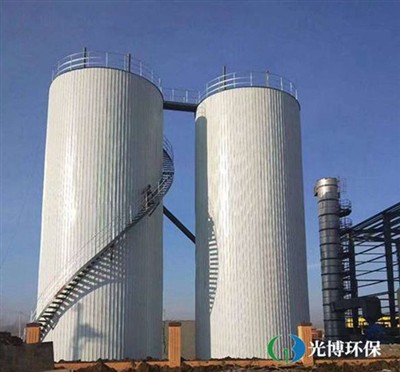
Wastewater Treatment Project of Jingyutang Pharmaceutical Co., Ltd. in Linyi, Shandong Province

I. Project Overview: Wastewater Treatment Project of Jin Yutang Pharmaceutical Co., Ltd. in Linyi, Shandong Province
II. Wastewater Profile: CODCr: ≤ 4500mg/L, Design wastewater volume is 800m³/d. This project adopts the process of hydrolysis acidification + IC + A/O.
III. Project Introduction: Shandong Jing Yutang Pharmaceutical Co., Ltd. was established in May 2012, with a registered capital of 30 million yuan. It is located in the National Economic and Technological Development Zone of Linyi City. Jing Yutang Pharmaceutical was invested and established by Jiangxi Pu Zheng Pharmaceutical Group, mainly focusing on the research, production and sales of high-quality and major drug varieties, and integrating the cultivation of medicinal materials and the dissemination of national medicine and national medical culture into a high-tech enterprise.
Shandong Shuanghua Pharmaceutical Co., Ltd. Wastewater Treatment Project

I. Project Overview:
Wastewater treatment volume: The wastewater treatment station processes 500 m3 of wastewater per day.
Process selection: Comprehensive treatment process of biochemistry and physicochemistry.
Wastewater description: The pollutants produced during the enterprise's production process are mainly the wastewater from the extraction of traditional Chinese medicine. For the wastewater from the extraction of traditional Chinese medicine produced during the production process, the pollution load is heavy, containing acids and other organic substances that are difficult to degrade in the environment.
The enterprise currently has a set of wastewater treatment facilities, but due to the increase in production scale and the increase in water volume, the existing process cannot meet the requirements. Therefore, the enterprise urgently needs to build a larger production wastewater treatment facility. The quality and quantity of the wastewater from the extraction of traditional Chinese medicine vary greatly, with a high COD level ranging from 5000 to 20000, and good biodegradability.
II. Project Introduction:
Guangbo Environmental Protection has signed a wastewater treatment contract with Shandong Shuanghua Pharmaceutical Co., Ltd. It is a wastewater treatment project for the wastewater generated from the extraction of traditional Chinese medicine in the production process of Shandong Shuanghua Pharmaceutical Co., Ltd.; Shuanghua is a comprehensive enterprise engaged in the processing and sales of Chinese herbal medicines. The company adopts advanced processes and combines local raw material advantages, mainly processing and extracting chrysanthemum and honeysuckle.
III. Treatment Process:
On behalf of the company, our unit has specially prepared the following preliminary design plan for the wastewater treatment project and estimated the investment for this project to be submitted for review by the company's leadership and the environmental protection department as an important part of the enterprise's infrastructure and a key link in water pollution control. The construction and operation of the wastewater treatment project are not only costly but also subject to the constraints and influences of various factors. The optimization selection of the treatment process scheme is the most critical for the operation performance of the treatment plant and the reduction of costs. Therefore, it is necessary to follow the established standards and general principles, from the perspective of overall optimization, combined with the design scale, the quality characteristics of the wastewater, as well as the local actual conditions and requirements, to select a feasible and economically reasonable scheme. After a comprehensive economic and technical comparison, the best overall process scheme and implementation method are selected.
IV. Compliance and Acceptance:
According to the determined water quality requirements for the influent and effluent of Shuanghua Pharmaceutical Co., Ltd.'s wastewater in Linyi Development Zone, the comprehensive treatment process of biochemistry and physicochemistry. With the cooperation of the company's engineering personnel and the factory's leadership, it has passed the acceptance by the local environmental protection department.
Sichuan Pu Zheng Pharmaceutical Co., Ltd. Wastewater Treatment Project

Project Overview: Wastewater Treatment Project of Jiangxi Pu Zheng Pharmaceutical Co., Ltd.
II. Wastewater Overview: CODCr: ≤ 5000mg/L, Design wastewater volume: 400m³/d. This project adopts the process of hydrolysis acidification + IC + A/O.
III. Project Introduction: Pu Zheng Pharmaceutical Group Co., Ltd. (hereinafter referred to as "Pu Zheng Pharmaceutical"), founded in 2003, its headquarters is located in the Jianganshan Economic Development Zone of the country. The company is dedicated to natural plant high-quality drugs, and has national pharmacopoeia varieties such as total eucommia capsules, 59 types of first-class national traditional Chinese medicine standardization construction drugs such as naked flower purple jujube granules, and national traditional Chinese medicine protected varieties such as red flower leisurely tablets and others, more than twenty innovative drugs derived from classic prescriptions.
IV. Equipment Information: GBEO electrolytic catalytic oxidation technology integrates the four main functions of electrochemical: electrolytic oxidation, electrolytic reduction, electrolytic flocculation, and electrolytic flotation to comprehensively decompose and separate pollutants in water. The three auxiliary functions are: improving biodegradability, sterilization, decolorization, and deodorization. Its technical advantages lie in: composite porous high-strength silicon-aluminum catalytic carrier, doping non-leachable catalytic components, improving the stability performance of the catalyst. The carrier preparation adopts a special preparation process, with greater mechanical strength and longer service life;
2) Carefully select the carrier and active components of the catalytic filler, using transition metals, rare metals, and rare earth metals as effective catalytic components to ensure the continuous high efficiency of ozone oxidation;
3) Multiple catalytic components, strengthening the applicability of the catalyst to different wastewater while improving catalytic activity.
4) Catalytic filler strength ≥ 100N/pebble, specific surface area ≥ 280m²/g, catalytic filler has no loss, and does not require regular addition;
5) Can catalyze the self-decomposition of ozone in water, increase the concentration of OH in water, thereby improving the ozone oxidation effect, with an oxidation efficiency that is 2-4 times higher than simple ozone oxidation;
6) Can reduce the activation energy of the reaction or change the reaction process, thereby achieving deep oxidation and maximum removal of organic pollutants;
7) Can efficiently remove difficult-to-degrade and harmful organic pollutants in wastewater, while significantly improving the biodegradability of wastewater, providing necessary conditions for the subsequent biochemical stage;
8) The investment for upgrading and transforming the wastewater treatment station is low, the effect is good, the operating cost is low, and there is no secondary pollution.