Tire production wastewater treatment solution
The global tire market size is estimated to range from 192 billion to 230 billion US dollars in 2023, and is expected to reach approximately 273 billion US dollars by 2029, with a compound annual growth rate (CAGR) of 4.5%.
The global tire market is driven by multiple factors such as the number of vehicles in existence, replacement demand, the development of new energy vehicles, and technological advancements. As a necessary consumable for automobiles, the market size of tires remains high and continues to grow with the economic development of emerging markets. In recent years, the Asia-Pacific region has become the largest production and consumption market globally, and China holds an important position in the global tire industry.
I. Overview of Customers for Tire Production Wastewater Treatment
The industrial wastewater treatment customers of tire manufacturing enterprises are mainly large-scale tire manufacturers and waste tire recycling/combustion enterprises. Due to the pressure from environmental protection regulations and the need for sustainable development, they seek efficient, stable, and wastewater treatment solutions with potential for resource reuse.
Tire production is a high-water-consuming and high-polluting industrial process, with complex wastewater composition, containing high concentrations of organic matter (COD), suspended solids (SS), sulfides, heavy metal ions (such as zinc), and residues of difficult-to-degrade chemical additives. As global environmental protection regulations become increasingly strict, these enterprises have become the core customer group for industrial wastewater treatment services.


Pictures of tire production
II. Wastewater treatment for tire production - Source of wastewater
The source of tire production wastewater is mainly related to multiple stages in the tire manufacturing process. These stages include rubber processing, rubber coating and cord treatment, vulcanization workshop, as well as domestic sewage and initial rainwater in the factory area. The following is a detailed explanation of the specific sources:
1. Rubber processing stage: During the rubber processing stage, equipment cleaning, floor rinsing, and cooling water discharge will generate a large amount of wastewater. These wastewater contains rubber particles, residual additives, and unreacted raw materials, etc., as pollutants.
2. Rubber coating and cord treatment process: In the rubber coating and cord treatment process, solutions containing various chemical additives are used, and after use, they form high-concentration organic wastewater. These wastewater contains decomposition products of accelerators, antioxidants, etc., of the additives.
3. Vulcanization workshop: Condensate water and cleaning water produced in the vulcanization workshop are also important sources. This part of the wastewater contains sulfides, oils, suspended solids, etc., as pollutants.
4. Domestic sewage and initial rainwater in the factory area: Domestic sewage and initial rainwater in the factory area will also be included in the wastewater treatment system. These wastewater contains organic substances from domestic sewage and pollutants from initial rainwater.


Comparison of pictures of polluted water and pictures of treated water
III. Process Flow for Wastewater Treatment in Tire Manufacturing
The wastewater generated during tire production comes from various sources, mainly including rubber mixing, vulcanization, equipment cleaning, cooling, and ground flushing. This type of wastewater has complex water quality, high pollutant concentrations (COD can reach 2000–5000 mg/L), poor biodegradability (BOD/COD ratio is low), and contains sulfides and zinc ions. It is difficult to treat. Therefore, a single treatment technology is insufficient to meet the discharge standards, and a multi-stage combined process is required for systematic treatment.
1. Grate, used to intercept large particles of suspended solids and rubber debris to prevent subsequent equipment from being blocked.
2. Equalization tank, where water quality and quantity are balanced, alleviating the impact load caused by production fluctuations and ensuring the stable operation of subsequent processes.
3. Physical pre-treatment such as air flotation or coagulation sedimentation, adding PAC (polyaluminum chloride) and PAM (polyacrylamide) as chemicals to make fine colloids and suspended solids coagulate into flocs and float or settle for separation, effectively removing most SS (suspended solids) and some COD. This stage can also combine pH adjustment to create suitable conditions for subsequent biochemical treatment.
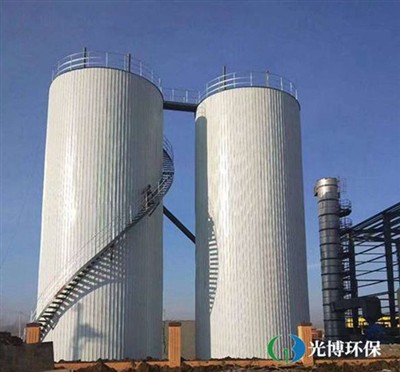
4. Biochemical treatment, generally using a "hydrolysis acidification + anaerobic + aerobic" combined process.
Hydrolysis acidification tank: Through microorganisms, difficult-to-degrade large-molecule organic substances are decomposed into easily-degradable small-molecule substances, significantly improving the biodegradability of the wastewater.
Anaerobic reactor: Such as UASB (upflow anaerobic sludge bed), further degrading organic matter under anaerobic conditions and generating biogas to achieve energy recovery.
Aerobic system: Such as A/O method, contact oxidation tank or MBR (membrane bioreactor), using aerobic bacteria in the activated sludge to completely degrade organic matter and complete the nitrogen and phosphorus removal process.
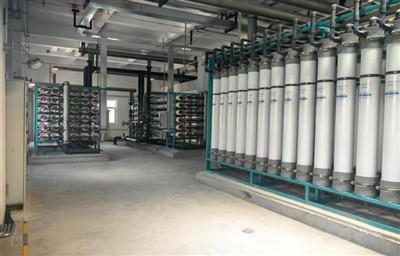
5. Advanced treatment. Common methods include ozone catalytic oxidation, activated carbon adsorption, sand filtration, ultrafiltration or reverse osmosis, etc.
Ozone oxidation: Can effectively degrade residual refractory organic substances and color.
MBR membrane system: Can achieve efficient sludge-water separation, with clear and transparent effluent approaching reuse standards.
Some enterprises also introduce Fenton oxidation or electrochemical treatment as strengthening measures to enhance the removal capacity of toxic substances.
Finally, the treated clear water is disinfected by ultraviolet light or sodium hypochlorite and then discharged or reused for factory greening, cooling systems, etc., achieving water resource conservation.
Sewage treatment flowchart
Industrial wastewater → Screening and interception → Equalization tank → Flotation and coagulation → Anaerobic biochemical treatment → Aerobic biochemical treatment → Advanced purification → Reuse or discharge
IV. Specific Case Studies on Wastewater Treatment in Tire Manufacturing
Jinzhou Haorundar Additives Co., Ltd. Sewage Treatment Project


I. Project Overview
Project Name: Sewage Treatment Station Construction Project of Jinzhou Haorundar Additive Co., Ltd.
Wastewater Overview: According to the information provided by the client, the designed daily wastewater treatment capacity is 100 m³/d.
II. Explanation of Guangbo Environmental Treatment Process:
All wastewater equipment is placed on the ground. The wastewater is lifted to the pre-adjustment tank of the wastewater treatment equipment by a wastewater pump, and then treated by the wastewater treatment equipment. After treatment, the wastewater is directly discharged into the municipal sewage network.
III. Introduction of GBDN High-Efficiency Biological Nitrogen Removal Technology:
GBDN high-efficiency biological nitrogen removal technology is the core technology developed by the company for wastewater biological nitrogen removal. This technology has been successfully applied in various wastewater treatment project cases with high ammonia nitrogen content, and the operation is stable and reliable.
IV. Advantages of Guangbo Environmental Process:
Guangbo Environmental has mastered various process packages for wastewater treatment, including pre-treatment, anaerobic, aerobic, and deep treatment. After wastewater treatment, it can meet the reuse standards. It is economical, simple, and has the characteristics of low requirements for the original water quality, simple treatment process and equipment, convenient operation, small equipment maintenance volume, low energy consumption, stable operation and treatment effect.
Sewage treatment manufacturer - Guangbo Environmental, with strong technical and installation and after-sales capabilities, has a large number of successful cases in industries such as labor protection, textile printing and dyeing, papermaking, starch protein, refined cellulose, breeding and animal husbandry, traditional Chinese medicine fermentation, food processing, and various chemical wastewater treatment. We look forward to cooperating with you, who has the demand for sewage treatment, to achieve mutual benefits.