Labor protection gloves wastewater treatment solution
Safety gloves, as an important component of personal protective equipment (PPE), are widely used in various industries such as healthcare, industry, construction, and food. In recent years, with stricter occupational health and safety regulations, enhanced public health awareness, and the accelerated infrastructure development in emerging markets, the global demand for high-quality safety gloves has steadily increased.
The global safety glove market is growing steadily, with a market size of 11.8 billion US dollars in 2023, and is expected to continue to grow in the coming years, reaching a market size of 25.33 billion US dollars by 2029.
I. Overview of Safety Glove Wastewater Treatment Customers
Safety glove manufacturing enterprises are one of the core customer groups for industrial wastewater treatment services. The wastewater from safety gloves has high treatment difficulty and reuse requirements due to the presence of latex proteins, sulfides, and organic solvents. During the production process of safety gloves (especially in the rubber impregnation process), a large amount of complex industrial wastewater is generated, mainly from the stages of latex impregnation, sulfurization fixation, and cleaning. If this wastewater is not properly treated and directly discharged, it not only violates environmental protection regulations but also may have a significant impact on the ecological environment. Therefore, technical service providers with compliant treatment capabilities are becoming key partners in the transformation and upgrading of this industry.


Pictures of produced protective gloves
II. Wastewater Treatment for Labor Protection Gloves
Wastewater Source
Safety gloves (such as latex, nitrile, etc.) undergo multiple steps during manufacturing, including dipping in glue, drying, demolding, and shaping. During this process, several stages generate high-concentration organic wastewater, especially during the water washing and degumming stages. These wastewater streams contain a large amount of organic matter, suspended solids, and chemical additive residues.
Wastewater source details
1. Equipment cleaning water: Used to rinse molds and production line equipment to remove residual latex or curing agents.
2. Water washing after glove demolding: Gloves need to be washed with water after being removed from the mold to clean the substances (such as calcium chloride) attached to the surface and unreacted latex proteins.
3. Dewatering and rinsing wastewater: During the low-temperature shaping and medium-temperature drying stages, dewatering treatment is carried out, and wastewater containing gel and surface active agents is discharged at this stage.
4. Concentrated water from pure water preparation: Some projects use pure water during mixing or cleaning, and the wastewater generated during the preparation process belongs to clean drainage and is usually discharged separately.
5. Ground flushing water: Mixed wastewater formed when cleaning the workshop floor, which may contain oil stains, dust, and other pollutants.
DMF is a solvent commonly used in synthetic leather or special impregnation processes. Although not all labor protection glove factories use it, it is present in some high-end product lines.

Comparison of pictures showing polluted water and pictures showing treated water
III. Process Flow for Waste Treatment of Labor Protection Gloves
Laboratory protective gloves (such as latex, nitrile, and rubber materials) will generate a large amount of high-concentration organic wastewater during processes such as dipping in glue, washing, and drying. The main pollutants include:
High chemical oxygen demand (COD): 2000–5000 mg/L
High ammonia nitrogen, suspended solids (SS)
Latex proteins, sulfides, organic solvents, DMF (dimethylformamide), and other difficult-to-degrade components.
If not properly treated, it will lead to water body eutrophication, soil pollution, and face the risk of environmental penalties.
Therefore, a systematic and customized wastewater treatment process needs to be constructed, taking into account both treatment efficiency and operating costs.
Core treatment process (divided by stages)
1. Pre-treatment stage: Remove impurities and reduce load
The goal of this stage is to remove large particles of suspended solids, colloids, and some organic substances, reducing the burden on the subsequent biochemical system.
Grate filtration: Intercept glove fragments, fibers, etc., large particles of impurities.
Equalization tank homogenization: Balance water quality and quantity to prevent shock load.
Air flotation/chemical coagulation:
Use a flat-flow dissolved air flotation device or chemical coagulation (such as polyaluminum chloride PAC), to remove oils, gels, and suspended solids.
Can remove 80% or more of SS and some COD.
2. Biochemical treatment stage: Microbial degradation core
It is divided into two sub-stages: anaerobic and aerobic, to achieve efficient decomposition of organic matter.
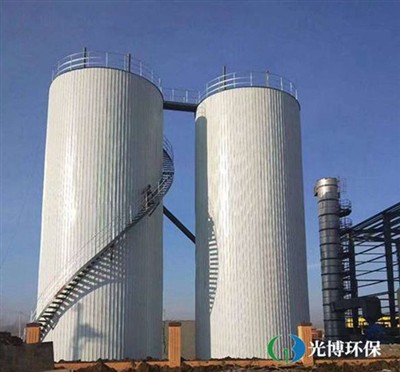
Anaerobic treatment: Decompose high-concentration organic matter, improve biodegradability; usually UASB, IC anaerobic tanks are used; COD removal rate can reach 60%-80%; generate biogas for energy recovery, the anaerobic section is often used to treat wastewater with COD > 3000 mg/L, which can significantly reduce energy consumption and reduce sludge production.
Aerobic treatment: Degradate COD, ammonia nitrogen, complete nitrification reaction; usually contact oxidation tanks, CASS, SBR, MBR membrane bioreactors are used; further remove COD, ammonia nitrogen, ensure stable effluent.
3. Deep treatment stage: Ensure effluent meets standards
Carry out fine treatment of the biochemical effluent to ensure compliance with the "Integrated Wastewater Discharge Standard" (GB8978-1996) or local standards.
Multi-media filtration: sand filtration, activated carbon adsorption, to remove residual color and trace organic substances.
4. Membrane separation technology:
MBR (membrane bioreactor): integrates biological degradation and membrane filtration, with clear effluent.
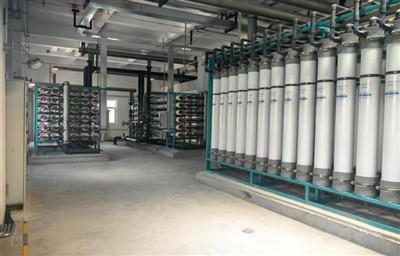
Ultrafiltration (UF) + reverse osmosis (RO): used for reclaimed water reuse, with a desalination rate of over 95%.
Disinfection treatment: ultraviolet or sodium hypochlorite sterilization, suitable for reuse for flushing or greening.
5. Special situation response strategies
DMF-containing wastewater: distillation recovery + pre-treatment by membrane separation before entering the main system
High sulfate/nitrate wastewater: enhanced pre-treatment + special cultivated bacteria for degradation
High salt concentration wastewater: MVR evaporation crystallization + solid-liquid separation
Note: Some enterprises use "ultrafiltration + reverse osmosis" to achieve a reclaimed water reuse rate of 70%, significantly alleviating water pressure.
Industrial Wastewater → Bar Screen → Equalization Tank → DAF / Coagulation → Anaerobic Biotreatment → Aerobic Biotreatment → Advanced Treatment → Discharge up to Standard
Can be equipped with a sewage treatment flow chart
IV. Specific Case Studies on Waste Treatment of Labor Protection Gloves
Starway Security Technology Co., Ltd. Sewage Treatment and Reclaimed Water Utilization Project

I. Project Name: Starway Security Technology Co., Ltd. Sewage Treatment and Reclaimed Water Project
II. Project Information: pH 6-9, COD ≤ 400mg/L, Water volume 15,000m³/d.
III. Process Information: The waste water from disposable gloves is transported through the workshop channels to the sewage station. It is cooled by the cooling tower first, then the water quality and volume are balanced in the regulating tank, and then it is raised into the coagulation and air flotation machine to remove the colloidal substances in the water through flotation. The effluent then enters the subsequent aerobic biochemical system. Due to the high total nitrogen content in the raw water, the aerobic system adopts a two-stage A/O denitrification process to ensure the full removal of total nitrogen and meet the discharge standards; at the same time, the organic matter in the water is degraded and adsorbed by the activated sludge; the effluent then enters the MBR membrane bioreactor, where the suspended solids in the water are retained through the membrane bioreactor, replacing the traditional secondary sedimentation tank, achieving the separation of sludge and hydraulic retention time, allowing for a higher sludge concentration to be retained in the sludge tank, ensuring the effluent quality while significantly reducing the land occupation, and making the effluent meet the requirements for entering the reclaimed water system.
The reclaimed water reuse system process adopts multi-media filter + RO reverse osmosis membrane, which removes trace turbidity substances and inorganic salt ions in the water to meet the production process requirements.
Hengdeli Gloves Co., Ltd. Hand Glove Wastewater Treatment Station Project
I. Project Overview:

Project Name: Hand Glove Wastewater Treatment Station Construction Project of Shandong Hengdeli Hand Glove Co., Ltd.
Treatment Process: DMF pre-treatment system + Nitrile glove pre-treatment system + Biochemical treatment system + Wastewater treatment system in a series of processes
Treatment Level: The treated water quality reaches Grade A1
II. Hazards of Hand Glove Wastewater:
The glove production process is complex, and the wastewater generated is large in volume, with relatively complex pollutant components. It is necessary to conduct segmented treatment of the wastewater, such as pre-treatment, pH adjustment, PAC/PAM flocculation, etc. However, the anaerobic, anoxic, and aerobic stages of the nitrile glove wastewater have low efficiency and are difficult to meet the standards.
III. Project Introduction:
The wastewater of the Hengdeli Hand Glove Wastewater Treatment Station mainly comes from the production of PU gloves and latex gloves, as well as the DMF distillation condensate waste generated by the newly installed DMF distillation reuse device of the enterprise. The designed total water volume is 300 m³/d. The wastewater is required to meet the standards of urban sewage pipes after treatment and comply with the "Water Quality Standards for Discharge into Urban Sewage Pipes".
IV. Explanation of Guangbo Environmental Treatment Process:
After considering the water volume and quality of the company, the final adopted treatment process is a series of processes including DMF pre-treatment system + Nitrile glove pre-treatment system + Biochemical treatment system + Wastewater treatment system. Finally, the effluent meets the standards. With the aim of comprehensively considering the needs of the customer, Jinan Guangbo Environmental has provided the company with a processing technology that is as simple as the process, easy to operate and manage, safe and reliable, simple to operate and adjust, and has a large flexibility. It has been unanimously recognized by the customer.